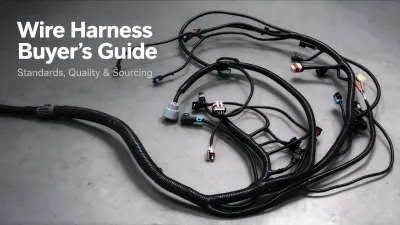
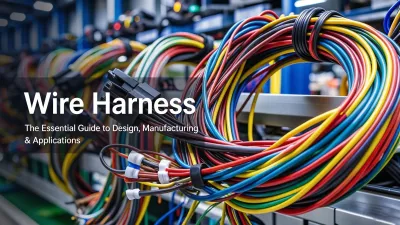
When an OEM drawing lists a part number like CP-01104010, it represents more than wires and connectors — it represents a locked design that must be reproduced identically, thousands of times, with traceable materials and test records. This guide walks through how a customer-specified harness moves from drawing to stable production, which is the core service behind every build-to-print part number.
Stage 1: Drawing and BOM Review
The process starts with a technical review, not a quotation. The manufacturer checks that the drawing defines everything production needs: wire types and gauges with insulation specs, connector part numbers with plating variants noted, crimp specifications, length tolerances, label text and position, and test requirements. Gaps found here cost minutes; gaps found in production cost schedule. A serious supplier returns an RFQ with questions marked on the drawing — a supplier who quotes immediately without questions will discover the gaps at your expense.
Stage 2: Sourcing and Material Lock
Connectors, contacts, wire and sleeving are sourced to the drawing's part numbers, with certificates of conformance retained per lot. Where the drawing specifies a brand part that is obsolete or long-lead, the manufacturer proposes form-fit-function alternatives for written approval — substitutions never happen silently. This material lock is what makes every future shipment identical to the first.
Stage 3: First Article and Process Setup
Production setup transfers the drawing into shop-floor artifacts: cut programs, crimp applicator setups with height verification, form boards or jigging for complex looms, and the test plan. The first article is built and measured — dimensions, crimp cross-sections or heights, continuity and hipot — and reviewed against the drawing before any volume run. For automotive and industrial customers, this stage maps directly onto PPAP-style documentation: process flow, control plan, first-article report and capability data where required.
Stage 4: Volume Production and Ongoing Control
In production, consistency comes from process control rather than inspection heroics: calibrated tooling on a maintenance schedule, in-process checks at defined stations, 100% electrical test on every assembly, and change control that forbids material or process changes without written approval. Lot traceability ties every shipped harness back to material lots and test records — the difference between a warranty mystery and a five-minute investigation.
What a Customer Should Expect from a Build-to-Print Partner
- Technical RFQ response with marked-up questions, not just a price
- First-article documentation you can file in your program records
- Per-lot traceability and test records on request, forever
- A change-control process that protects your design as fiercely as you do
Kaweei manufactures customer part-number harnesses — from single prototyping numbers to high-volume families — at our Dongguan facility, with the full documentation chain described above. If you have a drawing for a part like CP-01104010 and need a manufacturing partner, send it to our engineering team for a technical quotation, and see our custom wire harness guide for the broader design-to-production process.