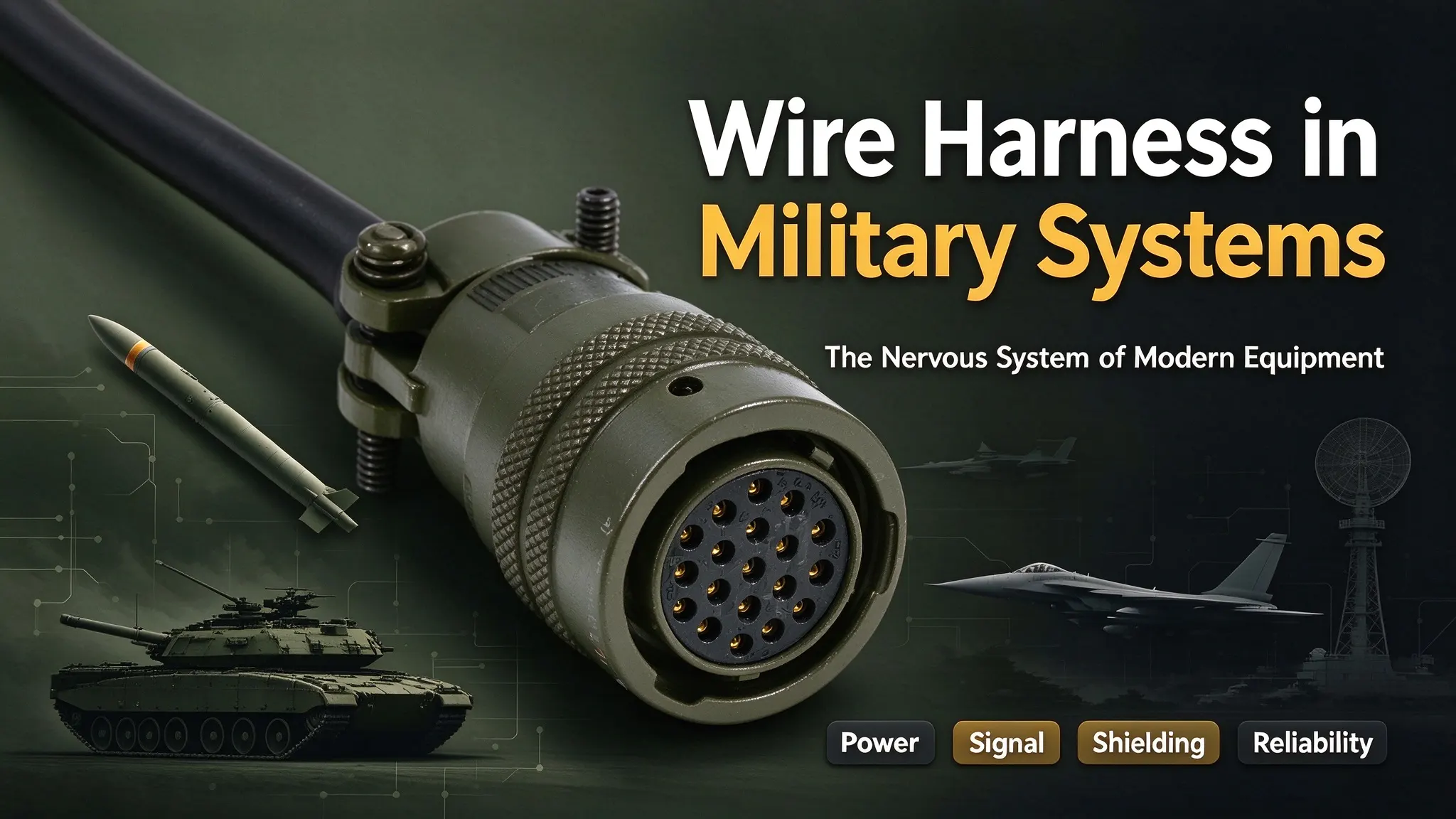
Why Do Tanks and Armored Units Need High-Power Wire Harnesses?
Tanks and armored vehicles are equipped with fire control, communication, and navigation systems.
High-power power harnesses: Provide stable energy to power and fire control systems, ensuring continuous operation in heavy-duty conditions.
Multi-core signal harnesses: Transmit sensor and communication data, ensuring real-time command and control.
Key features: high-temperature resistance, vibration resistance, and wear resistance.

How Do Missile and Rocket Units Ensure Guidance Accuracy?
Missile launch requires millisecond-level responsiveness and high-precision guidance.
High-shielding, low-loss signal harnesses: Ensure accurate communication between guidance systems and launch control, preventing electromagnetic interference.
Multi-functional integrated harnesses: Transmit both power and signals in a limited space, providing compact and reliable electrical support.
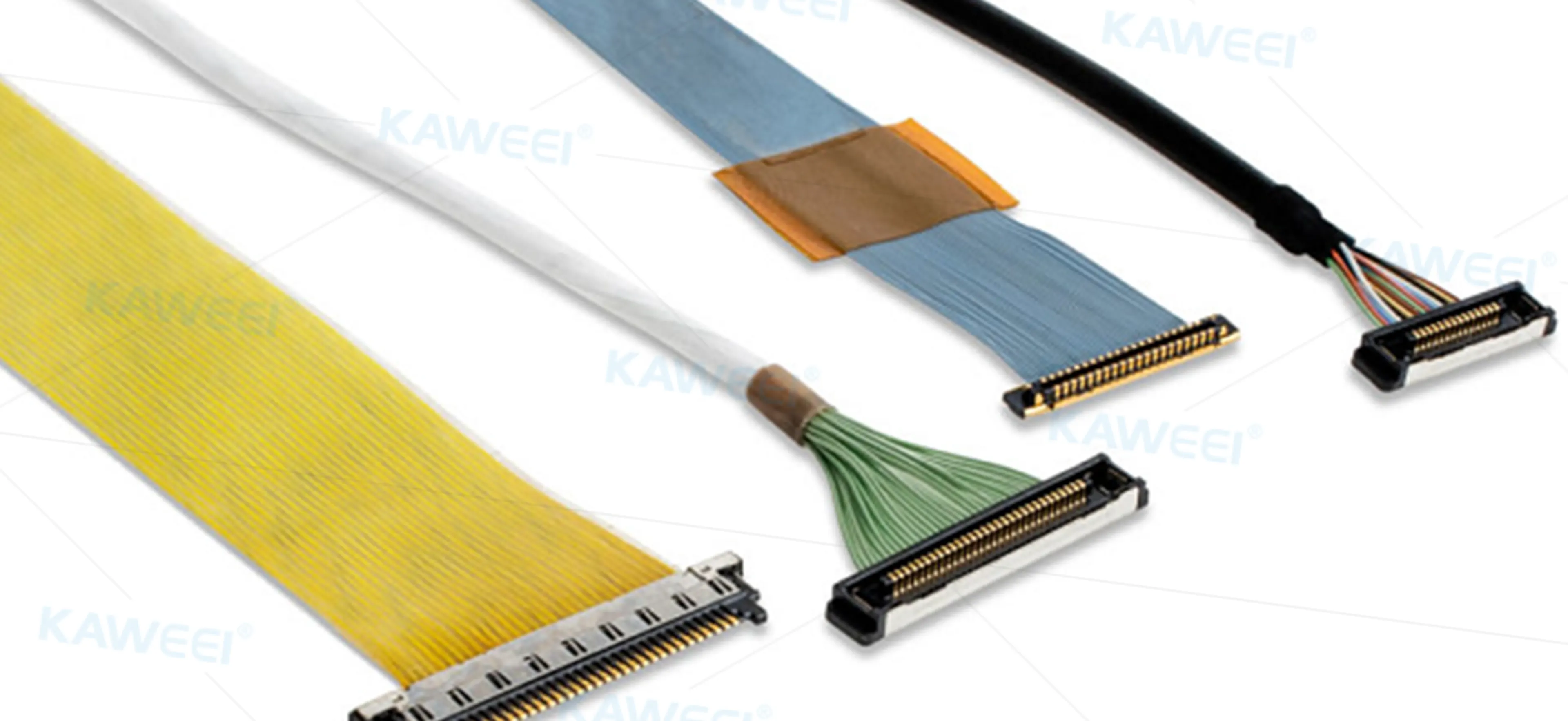
Why Do Aerial Fleets Require Lightweight Wire Harnesses?
Fighter jets, bombers, and transport aircraft require lightweight and high-strength harnesses.
Lightweight flexible harnesses: Made of aluminum alloy or composite materials, reducing aircraft weight and increasing tensile strength.
Aviation signal harnesses: Connect navigation, radar, and communication systems to ensure stable airborne operations.
Reference: Aviation Wire Harness Standards
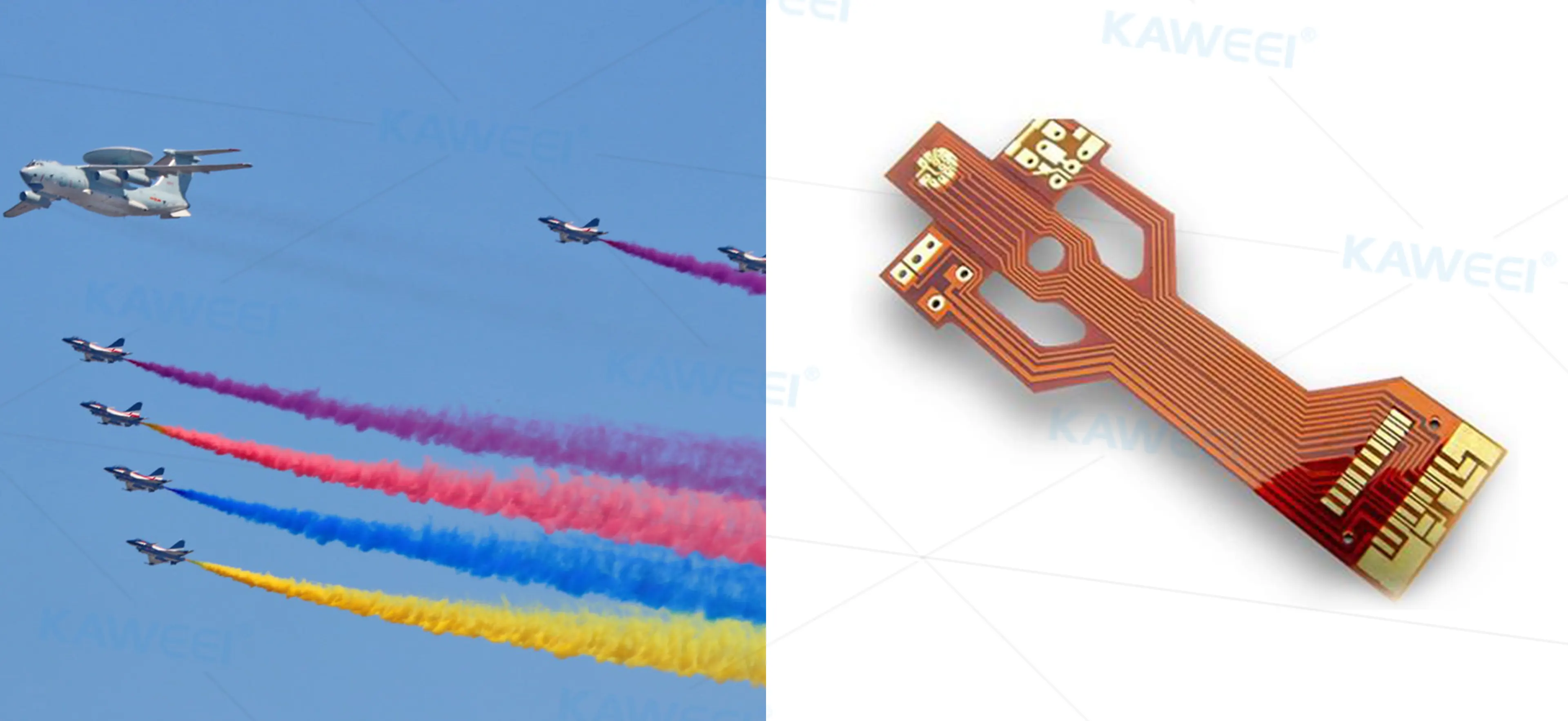
How Do Drone Squadrons Achieve High-Speed Coordination?
Drone formations need high-speed, low-latency data transmission.
High-speed data transmission harnesses: Support real-time transmission of images, navigation, and control signals.
Anti-interference multi-core harnesses: Ensure stable flight and mission execution in complex electromagnetic environments.
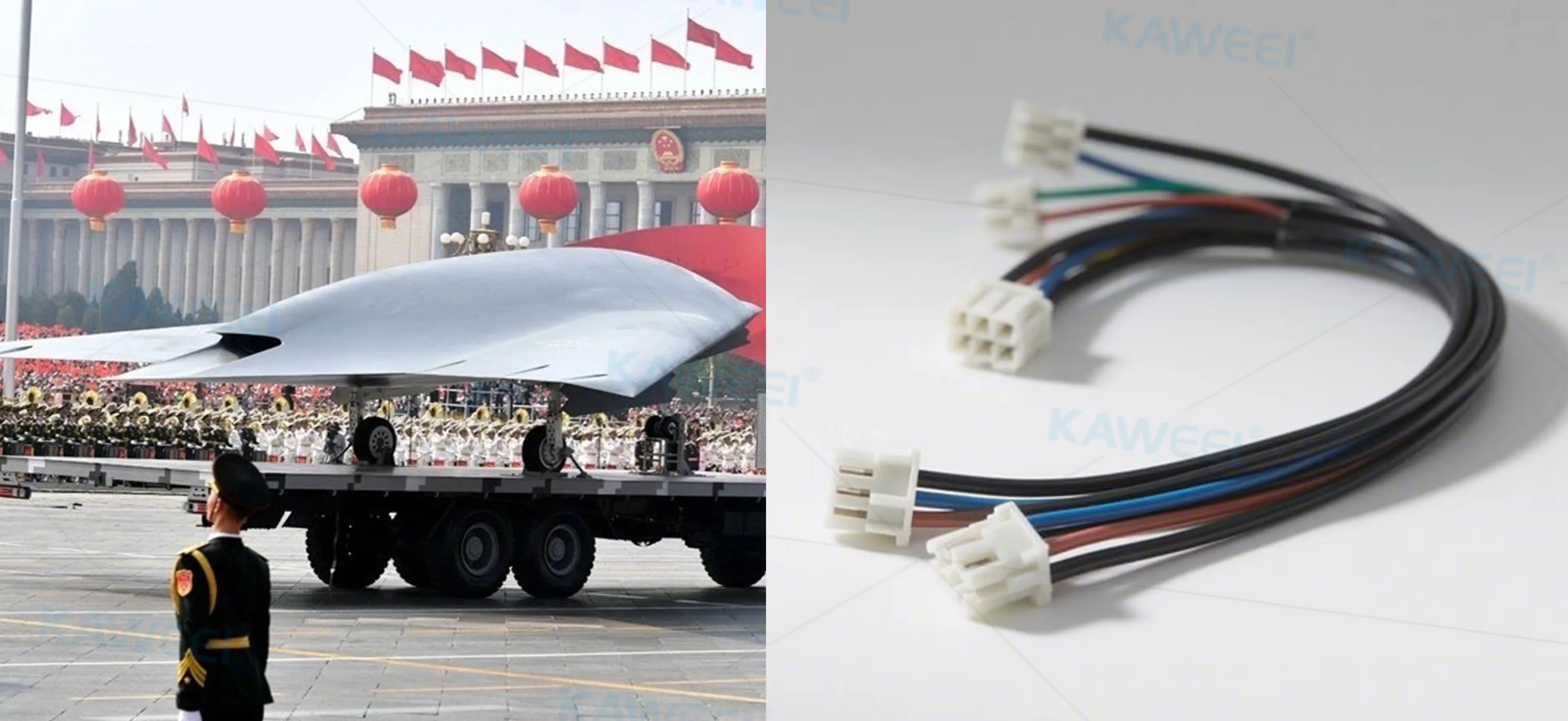
What Are the Features of Harnesses in Robotic Dogs and Unmanned Combat Vehicles?
Robotic dogs and unmanned vehicles integrate sensors, cameras, power systems, and control modules.
Multi-functional integrated harnesses: Transmit power and signals, enabling flexible and stable operation.
High-flexibility, fatigue-resistant harnesses: Adapt to complex terrain and long-term operations.
Reference: Robotics Wiring Harness
How Do Radar and Communication Systems Ensure Signal Stability?
Radar and communication systems are the “eyes and ears” of modern warfare.
High-shielding communication harnesses: Effectively resist electromagnetic interference, ensuring long-range warning and battlefield communication.
High-speed data harnesses: Provide fast and reliable signal transmission for radar detection and command-control systems.
Reference: Radar & Communication Harness
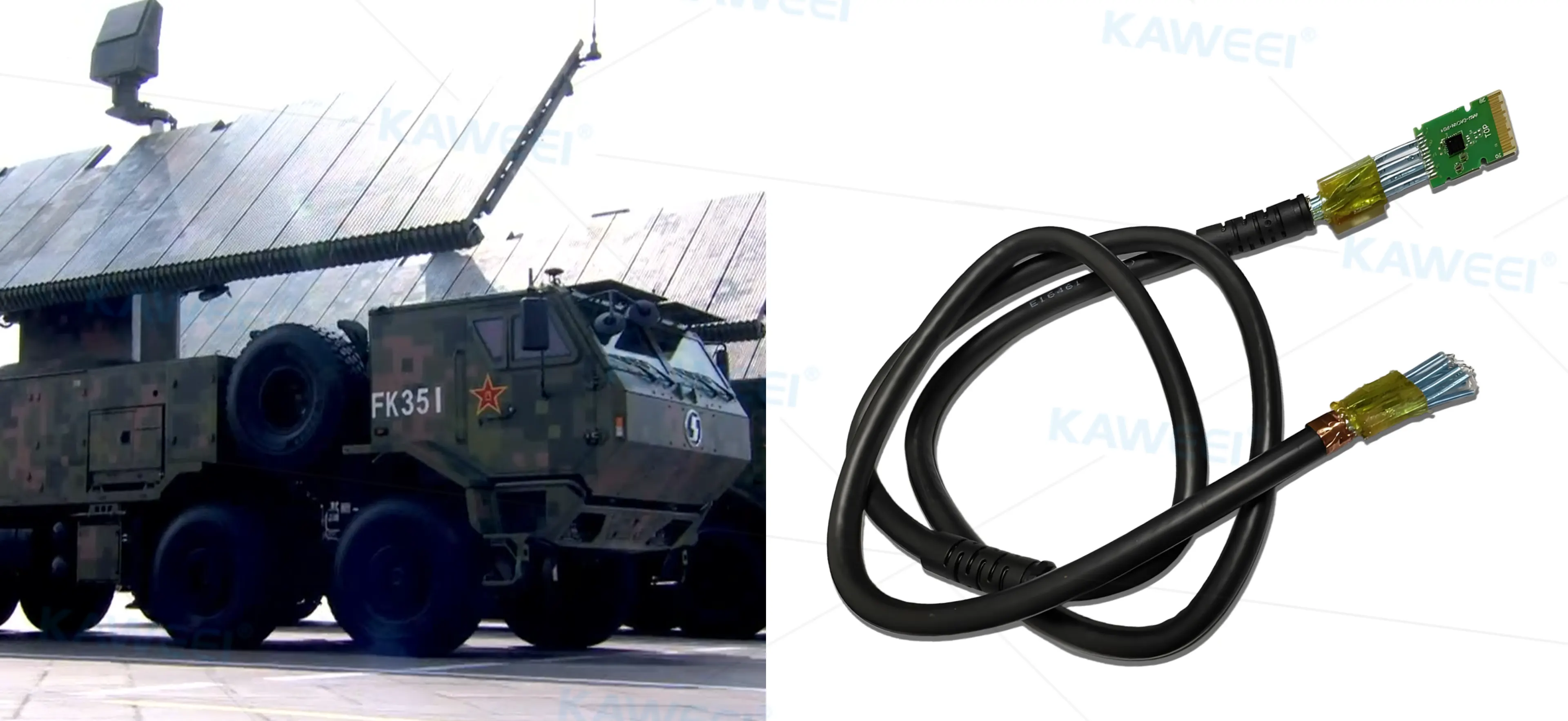
Wire Harness Application Summary Table
| Equipment Type | Wire Harness Type & Application |
| Tanks and Armored Units | High-power power harnesses, multi-core signal harnesses for reliable power and fire control |
| Missile and Rocket Units | High-shielding, low-loss signal harnesses, multi-functional integrated harnesses for guidance and launch control |
| Aerial Fleets (Fighter/Transport Aircraft) | Lightweight flexible harnesses, aviation signal harnesses to optimize weight and space layout, connecting navigation, radar, and communication systems |
| Drone Squadrons | High-speed data transmission harnesses, anti-interference multi-core harnesses for precise formation and real-time communication |
| Robotic Dogs & Unmanned Vehicles | Multi-functional integrated harnesses, high-flexibility fatigue-resistant harnesses for power, signal transmission, and complex terrain adaptation |
| Radar and Communication Systems | High-shielding communication harnesses and high-speed data harnesses to ensure stable transmission in electromagnetic environments |
FAQ
Q1: What is a wire harness?
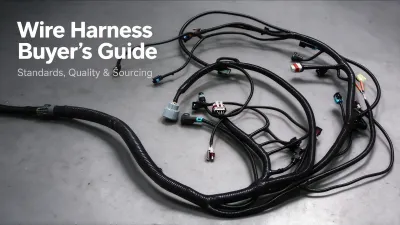
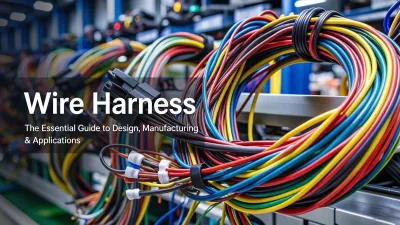
A1: A wire harness is an assembly of multiple wires, cables, and connectors organized into a single system. It is widely used in automotive, aviation, military, robotics, and communication equipment.
Q2: What is the role of a harness customization factory?
A2: Harness customization factories design, manufacture, and assemble wire harnesses tailored to specific requirements, ensuring stable and safe operation in various environments, including vibration resistance, electromagnetic shielding, and high-temperature tolerance.
Q3: Why do military systems require customized wire harnesses?
A3: Modern military equipment involves power systems, control systems, sensor networks, and communication systems. Standard harnesses cannot meet the high-precision and complex-environment requirements, whereas customized harnesses optimize space, enhance anti-interference, and achieve lightweight, high-performance solutions.
Q4: What are the advantages of Kaweei Harness Customization Factory?
A4: Kaweei combines rich industrial experience and advanced manufacturing equipment to provide high-precision, reliable, lightweight, and multi-functional integrated harness solutions for military, automotive, new energy, and intelligent equipment.
Q5: How are wire harnesses used in drones and robotic systems?
A5: Drones and robotic systems require high-speed data transmission and power supply. Multi-functional integrated harnesses transmit control signals, power, and sensor data within a limited space, enabling precise control and stable operations.
Conclusion
The military parade commemorating the 70th anniversary of the victory of the Chinese People's War of Resistance Against Japanese Aggression showcased China's military prowess. However, the reliable operation of these advanced systems relies on custom wiring harness factories. In tanks, missiles, fighter jets, drones, robot dogs, and radar communication systems, high-performance wiring harnesses ensure power and signal transmission, anti-interference, and lightweight optimization, ensuring equipment reliability even under extreme conditions.