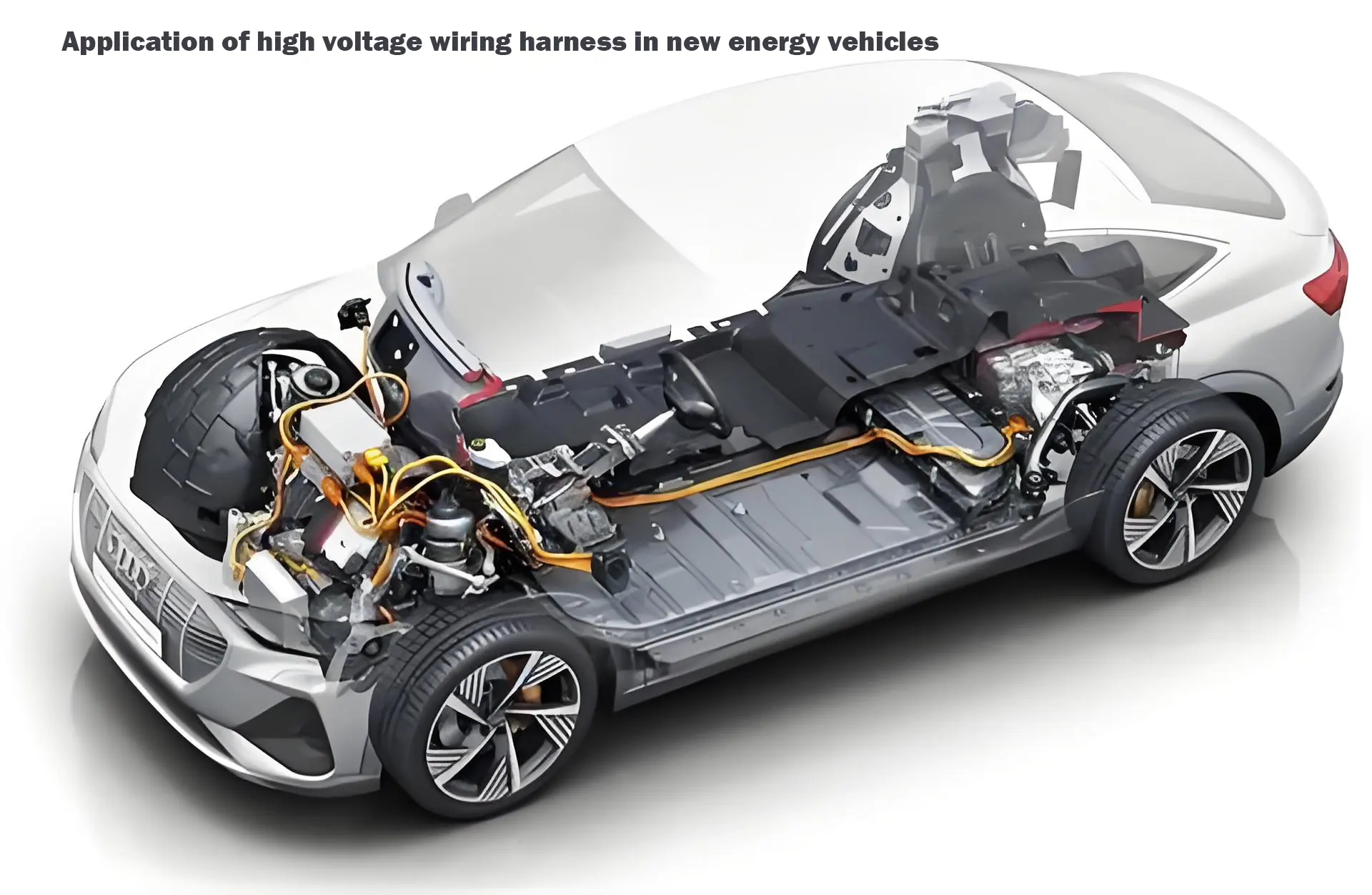
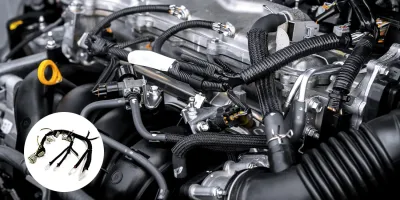
The rapid development of electric vehicles has increased the requirements for automotive electrical connection systems. Behind every battery platform, electric drive system, intelligent cockpit, and advanced driver assistance function, a reliable wire harness system is essential for stable power transmission and data communication.
However, manufacturing an electric vehicle (EV) wire harness is far more complex than simply connecting wires and terminals. A production-ready EV harness requires systematic engineering development, precise manufacturing processes, strict quality control, and continuous validation before it can be installed in vehicles.
From initial drawing review and material selection to prototype development, mass production, and final inspection, every stage directly affects harness reliability, installation efficiency, and long-term vehicle performance.
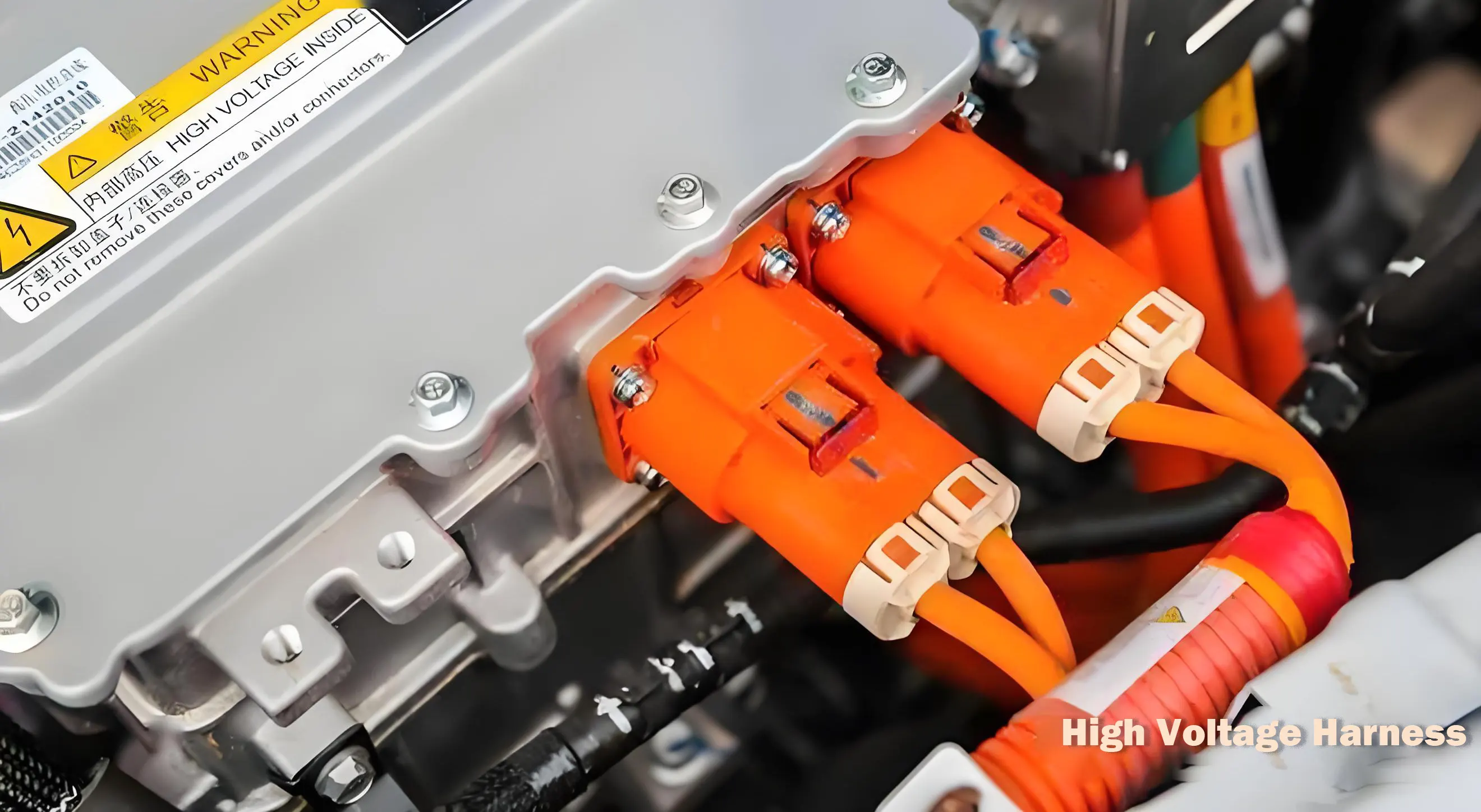
Different EV applications also require different engineering considerations. High-voltage battery cables focus on electrical safety and insulation performance, while dashboard and communication harnesses require compact design, signal stability, and compatibility with increasingly intelligent vehicle systems.
For a detailed introduction to EV harness structures and applications, including high-voltage, low-voltage, and dashboard harness solutions, please refer to our guide:
Electric Vehicle Wire Harness: High Voltage, Low Voltage & Dashboard Harness Solutions
As an experienced custom wire harness manufacturer, we support customers from early-stage engineering evaluation to prototype development and mass production, providing reliable EV harness solutions based on specific vehicle requirements.
1. EV Wire Harness Engineering Design
Qualified EV harness design takes electrical performance, installation environment, mechanical stress, production feasibility and later maintenance into full account. Most harness failures stem from unreasonable routing, insufficient protection or mismatched connectors, rather than wire defects. Thus, professional design starts with systematic engineering analysis.
1.1 Drawing Review & Requirement Analysis
The first design step is to sort out customer technical documents and clarify all requirements, including electrical parameters, connector specs, installation space, operating environment and production volume. Engineers verify design rationality in advance to avoid later modifications.
|
Evaluation Item
|
Purpose
|
|
Cable specification
|
Guarantee safe current carrying capacity
|
|
Connector selection
|
Ensure matching and stable connection
|
|
Harness dimensions
|
Verify installation feasibility
|
|
Routing design
|
Reduce bending and vibration damage
|
|
Protection structure
|
Resist heat, moisture and abrasion
|
1.2 Cable & Connector Selection
Material selection follows voltage level, current load, temperature, flexibility and space limits:
- High-voltage harnesses: High insulation and large current-carrying cables for batteries and motors
- Low-voltage dashboard harnesses: Flexible, compact cables for stable signal transmission
- Communication harnesses: Shielded cables with precise impedance control for signal integrity
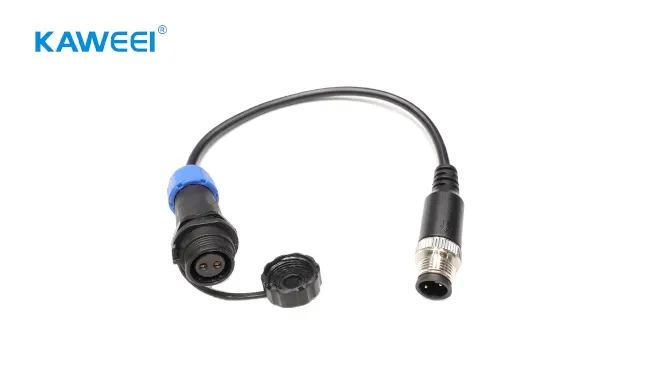
Connectors must offer reliable locking, environmental sealing and durability to adapt to vehicle vibration and temperature changes.
1.3 Routing & Protection Design
Harnesses endure continuous vibration, temperature fluctuation, water splash and friction during operation. Engineers optimize routing paths, fixing points, bending radius and branch positions to avoid structural stress.
|
Protection Method
|
Main Purpose
|
|
Corrugated tubing
|
Prevent mechanical abrasion
|
|
Braided sleeve
|
Improve wear resistance and flexibility
|
|
Waterproof connectors
|
Block moisture ingress
|
|
Shielding layer
|
Reduce electromagnetic interference
|
|
Cable clamps
|
Fix routing position stably
|
1.4 Prototype Development & Validation
After design confirmation, prototype samples are produced to verify installation adaptability, connector matching, electrical performance and routing rationality. Prototypes expose hidden problems like space interference that cannot be found in drawings, eliminating mass production risks in advance.
2. EV Wire Harness Manufacturing Process
EV harness production adopts standardized, high-precision processes to ensure automotive-grade safety and consistency.
The full workflow:Material Inspection → Wire Cutting & Stripping → Terminal Crimping → Connector Assembly → Harness Forming → Electrical Testing → Final Inspection
2.1 Incoming Material Inspection
All wires, cables, terminals and connectors are inspected for specification accuracy, quality qualification and compliance with customer standards to avoid safety hazards such as overheating and poor contact.
2.2 Wire Cutting & Processing
Wires are cut and stripped with precise dimensional control to prevent assembly stress, extra weight or layout chaos, ensuring subsequent assembly consistency.
2.3 Terminal Crimping (Core Process)
Qualified crimping creates stable mechanical and electrical connections with low resistance and strong vibration resistance. Strict control of crimping height, force and pull-out strength avoids overheating, signal interruption and connection failure.
2.4 Connector & Harness Assembly
Terminals are inserted and locked correctly per circuit design. High-voltage connectors require reliable locking, anti-touch protection and sealing. Wires and accessories are then integrated into a complete, neatly structured harness.
2.5 Final Forming & Assembly
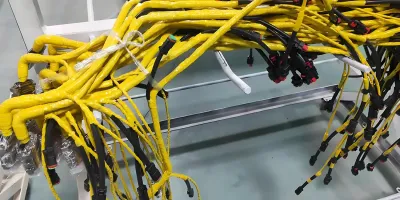
Protective tubes, shielding parts and fixing brackets are installed to ensure the finished harness features stable structure, convenient installation and long-term environmental protection.
2.6 Pilot to Mass Production
Products go through Prototype → Review → Process Optimization → Pilot Production → Mass Production.
Pilot production verifies process stability, solves assembly and efficiency problems, and ensures consistent batch quality.
3. Core Production Challenges & Solutions
3.1 High-Voltage Safety Risks
High-voltage systems face insulation breakdown, leakage and overheating risks.
Solutions: adopt high-grade insulation materials, optimize cable structure and conduct strict high-voltage testing.
3.2 Electromagnetic Interference (EMI)
Motors and inverters generate electromagnetic noise affecting sensors and control modules.
Solutions: optimize shielding structure, standardize grounding and rationalize harness routing.
3.3 Limited Installation Space
Compact vehicle space conflicts with multi-functional electronic systems.
Solutions: miniaturized routing, modular design and customized branch layout.
4. Testing & Quality Control
Full-process quality control covers materials, production and finished products to eliminate electrical and mechanical failures.
4.1 Electrical Performance Testing
|
Test Item
|
Purpose
|
|
Continuity Test
|
Avoid open/short circuits and wrong wiring
|
|
Insulation Resistance Test
|
Prevent electrical leakage
|
|
Hi-Pot Test
|
Verify high-voltage insulation safety
|
|
Resistance Test
|
Ensure stable conductivity
|
4.2 Mechanical & Environmental Testing
Mechanical tests (pull force, locking, bending, vibration) verify long-term durability. Environmental tests (waterproof, temperature cycling, aging, corrosion) confirm adaptability to complex vehicle operating conditions.
4.3 Industry Standards & Traceability
We comply with IATF 16949,
IPC/WHMA-A-620, RoHS and REACH standards. A complete traceability system records all production and testing data for continuous process optimization and quality improvement.
5. Project Case Studies
5.1 High-Voltage Harness for Commercial EVs
Challenge: Outdoor high-load operation causes material aging and vibration-induced connection failure.
Solution: Optimized high-temperature resistant materials, upgraded protective structures and strengthened batch process control.
Result: Improved harness durability and stable electrical performance in harsh environments.
5.2 Modular Dashboard Harness for Intelligent EVs
Challenge: Traditional harnesses lack scalability for new intelligent modules.
Solution: Adopted modular layout, reserved upgrade interfaces and optimized anti-interference routing.
Result: Supported intelligent cockpit upgrading with flexible installation and expandable functions.
6. How to Choose a Qualified EV Harness Manufacturer
Reliable suppliers must have four core capabilities:
- Engineering capability: Early design intervention and scheme optimization
- Full-cycle production: Support prototyping, small-batch trial and mass delivery
- Complete quality system: Professional testing and full-process traceability
- Customization ability: Tailor solutions for different EV platform requirements
7. FAQs
Q1: How long is the EV harness development cycle?
A: Simple projects take several weeks; complete vehicle-level harnesses need longer iteration and validation.
Q2: Can you customize harnesses per customer drawings?
A: Yes, we provide full customization based on drawings, samples or technical specs.
Q3: What information is needed for quotation?
A: Drawings, application environment, voltage/current parameters, connector specs and production volume.
Q4: Difference between prototype and mass-production harnesses?
A: Prototypes verify design feasibility; mass-production harnesses require higher process consistency and quality stability for long-term batch supply.
Custom EV Wire Harness Solutions
We provide one-stop customized EV harness services including
engineering design, prototyping, precision manufacturing, performance testing and mass delivery. We tailor reliable harness solutions per your vehicle’s specific technical requirements. Please provide your project parameters (application scenario, electrical specs, drawings, connector requirements and production volume) for professional evaluation and customized solutions.