Buying a custom wire harness or cable assembly means turning an engineering need into a clear specification, then into a reliable supplier relationship. This buyer's guide walks procurement teams, engineers and project managers through the decision path: the wire harness terms you need, the standards that apply, what to send for a quote, and how to judge a manufacturer. Use it before you request quotes so you compare suppliers on the right basis.
Essential Wire Harness Terms Buyers Should Know
You don't need to be a harness engineer, but you do need to specify the part correctly. These six terms decide what goes into your drawing and your request for quote; each links to a deeper guide.
| Term | What it means for buying | Related guide |
|---|---|---|
| Wire Harness vs. Cable Assembly | Harnesses typically group and organize wires into a defined assembly; cable assemblies are finished cables terminated with connectors. Define the part by its drawing, interfaces and function, not its name. | What is a wire harness |
| AWG | Smaller number means larger wire. Specify the gauge, or provide current, length, voltage drop and operating conditions so the supplier can size it. | Wire gauge selection guide |
| UL Wire Styles | Style numbers such as UL 1007 define wire construction and ratings. Confirm against the wire manufacturer's documentation rather than relying on the number alone. | UL 1007 wire harness guide |
| Crimp | A mechanical and electrical joint formed by compressing a terminal around a conductor, evaluated by inspection, height, pull or cross‑section as applicable. | IPC/WHMA‑A‑620 standard guide |
| IP Rating | Dust and water protection under defined test conditions. Confirm whether the rating applies to the connector alone or the complete assembly, including cable exits and seals. | Waterproof cable assembly guide |
| DFM | Design choices that make a harness producible and repeatable. Applying DFM early can help identify manufacturing risks and clarify tooling and assembly requirements. | DFM for wire harnesses guide |
Wire Harness Standards and Compliance Requirements
When reviewing a wire harness supplier, distinguish between a quality management system certificate, a component approval, a material compliance declaration, and a product inspection report — each provides different evidence. Ask the supplier to identify the applicable requirements for your project and provide the relevant documentation rather than relying on a general statement of compliance.
| Standard or framework | What buyers should verify |
|---|---|
| UL / CSA | Verify that the specified wire, component, or finished product has the approval required for the target market and application. Check the exact model or construction, ratings, applicable certification scope, and supporting documentation. |
| IPC/WHMA‑A‑620 | Workmanship and acceptance criteria for cable and wire harness assemblies. Confirm the applicable revision, product class, and any additional customer‑specific requirements. See the IPC/WHMA‑A‑620 standard guide. |
| IATF 16949 | Automotive quality‑management certification status for the relevant manufacturing site and business scope, plus any customer‑specific requirements. |
| ISO 13485 | Medical‑device quality‑management certification status for the relevant business scope and location. |
| RoHS / REACH requirements | Verify applicable substance restrictions, supplier declarations, material information, and supporting compliance documentation for the target market and product. |
A supplier's certifications can help with initial screening, but they do not replace product‑specific verification. Confirm the certificate's scope, covered manufacturing site, validity, applicable wire and component approvals, and the documentation required by your program.
What Information Do You Need for a Wire Harness Quote?
Send enough engineering data for the supplier to price accurately and flag open items. The table below separates what is essential for an accurate quote from what can be confirmed later. If you do not yet have a complete drawing, provide the wiring information and application you do have, and ask the supplier to list all quotation assumptions and unresolved open points.
| Category | Details | Why it matters |
|---|---|---|
| Essential for an Accurate Quote | Drawing, wiring schematic or wire list | Defines electrical connections, pin assignment and assembly geometry. |
| Essential for an Accurate Quote | Connector manufacturer and part numbers, if specified | Helps identify the intended components and clarify whether any approved alternatives are acceptable. |
| Essential for an Accurate Quote | Wire specifications, required lengths and electrical ratings | Helps determine whether the proposed materials meet the project's electrical, thermal and mechanical requirements. |
| Essential for an Accurate Quote | Defined test and acceptance criteria | Sets what inspections, tests and reports must be delivered. |
| Helpful for Initial Quotation | Initial order quantity and estimated annual volume | Informs component pricing, tooling planning and per‑unit cost. |
| Helpful for Initial Quotation | Operating environment and installation conditions | Defines temperature, vibration, bending, dust or liquid exposure. |
| Helpful for Initial Quotation | Target delivery date and shipping destination | Sets logistics and lead‑time expectations. |
| To Be Confirmed Before Production | Cosmetic details, secondary marking and packaging specifications | Can be finalized after the initial quote; the supplier documents all assumptions. |
Our wire harness cost factors guide explains what drives price so you can compare quotes like‑for‑like.
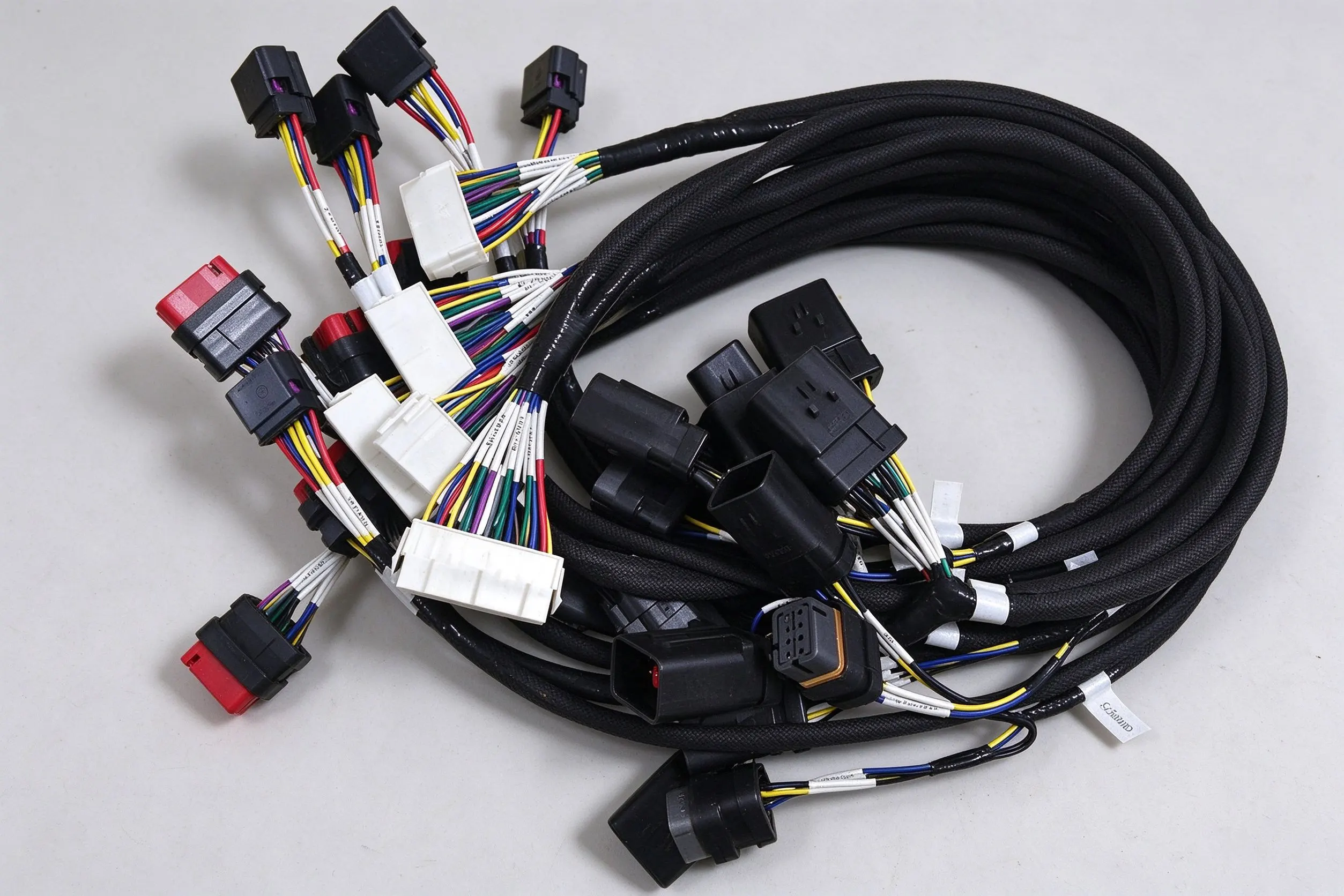
How to Evaluate a Wire Harness Manufacturer
A capable manufacturer is more than a set of certificates. Look across engineering support, production capacity, quality control, testing and traceability:
‑ Quality management system and relevant certifications or approvals for your market and product class. ‑ Engineering support and DFM review — how the supplier handles drawings, ambiguities and design changes. ‑ Inspection and acceptance procedures against your drawing, specification and control plan. ‑ Electrical testing capability — continuity, open and short checks, plus insulation, dielectric, pull or leak tests when specified. Our wire harness testing guide details the options. ‑ Traceability and documentation — how materials, revisions and lot records are tracked.
Confirm that the proposed controls match your specific product and customer requirements rather than relying on certifications alone.
Supplier Verification Question List (copy‑paste into emails)
Use these questions to validate capabilities before awarding the project:
- What electrical tests are included in the quoted price, and which tests incur extra charges?
- How are drawing revisions and approved material substitutions controlled throughout production?
- What inspection records or compliance documents will be provided with each shipment or batch?
- How is consistency between approved prototype samples and mass‑production units verified?
- Is your certification valid for this manufacturing site and this product category? Can you share the certificate scope?
- What is your process for material lot traceability for custom harness assemblies?
Prototype Development and Mass Production
A single supplier may support both prototype builds and volume production, provided its engineering resources, equipment, process controls, and capacity match the project requirements. Before approving the transition, confirm revision control, material traceability where required, tooling, inspection criteria, test procedures, and change‑management procedures. Ask how the supplier verifies that production units remain consistent with the approved sample. Our DFM guide covers the review points that protect that transition.
Why Wire Harness Quotes Differ
Wire harness quotes can differ because of material specifications, connector sourcing, assembly complexity, tooling, production volume, inspection requirements, and compliance documentation. Compare quotations against the same drawing revision, material requirements, test scope, order quantity, and delivery terms rather than price alone. See what drives wire harness cost before you compare.
Example: Comparing Two Wire Harness Quotes
Supplier A quotes a lower unit price, while Supplier B includes a more detailed testing and documentation package. Before choosing either supplier, confirm whether both quotations use the same connector part numbers, wire specifications, production quantities, test requirements and delivery terms. If Supplier A excludes required testing or quotes unapproved alternative components, the lower price is not a like‑for‑like comparison. Ask both suppliers to revise their quotations against the same technical and quality requirements before making a decision.
Frequently Asked Questions About Wire Harness Sourcing
The questions below are the ones procurement teams ask most often before committing to a supplier.
What information is needed to request a wire harness quote?
Provide a drawing or wiring diagram, wire specifications, connector part numbers, lengths, order quantities, operating conditions, and applicable test or compliance requirements. If anything is not yet final, list the open items and ask the supplier to state its assumptions before quoting.
Can a wire harness manufacturer support both prototypes and mass production?
Some suppliers support both, but capability depends on the product design, equipment, process controls and production capacity. Before scaling up, confirm how design revisions, sample approval, production validation and quality requirements are managed.
What are the minimum requirements for a custom wire harness quotation?
At minimum, provide the intended application, available drawing or wiring information, key component specifications, estimated quantity and delivery requirements. Missing details may require clarification or assumptions before a reliable quotation can be issued.
How can I evaluate a wire harness manufacturer's quality?
Review the quality management system, certifications and their scope, inspection procedures, electrical testing capability, traceability and experience with similar products. Confirm the controls match your specific product and customer requirements, and check that certificates cover the actual manufacturing site and product category.
Why do quotations for the same wire harness differ between suppliers?
Prices vary with wire and connector specifications, component sourcing, assembly complexity, tooling, volume, testing, documentation and delivery terms. Compare quotations against the same drawing revision, bill of materials, quality requirements, quantities and shipping conditions rather than price alone.
Request a Wire Harness Quote
Ready to discuss a custom wire harness or cable assembly? Send your drawing, schematic, or wire list, along with connector part numbers, estimated quantities, operating environment, and target markets. Our team can review the available information, identify outstanding technical questions, and discuss the manufacturing and testing requirements for your project. Contact us to get started.