Table of Contents
- 1. What Is a Waterproof Cable Assembly?
- 2. Waterproof Sealing Materials for Cable Assemblies
- How to Select the Right Waterproof Sealing Material?
- 3. Waterproof Cable Assembly Manufacturing Process
- 4. Understanding IP67 and IP68 Waterproof Protection Ratings
- IP67 vs IP68 Waterproof Cable Assembly Comparison
- 5. Waterproof Cable Assembly Testing Methods
- 6. Custom Waterproof Cable Assembly Solutions
- 7. Frequently Asked Questions About Waterproof Cable Assemblies
- Conclusion
by Admin
2025-07-02 00:59:31
Waterproof Cable Assembly: Materials, Manufacturing Process & IP67/IP68 Testing Guide
Waterproof cable assemblies are designed to provide reliable power and signal transmission in environments exposed to water, moisture, dust and harsh operating conditions.
Compared with standard cable assemblies, waterproof cable assemblies require additional protection technologies, including waterproof connectors, sealing materials, overmolding processes and strict waterproof testing procedures.
In automotive systems, new energy vehicles, industrial equipment, outdoor electronics and automation applications, waterproof performance directly affects product reliability, service life and operational safety.
A reliable waterproof cable assembly is not determined by a single component. It depends on the combination of:
- Proper sealing materials
- Suitable waterproof connector design
- Professional manufacturing processes
- Verified IP protection testing
1. What Is a Waterproof Cable Assembly?
A waterproof cable assembly is a customized electrical connection system designed to protect internal wires, terminals and electrical contacts from water, moisture and environmental contamination.
The primary purpose of waterproof protection is to maintain stable electrical performance when products are exposed to:
- Rain and humidity
- Water splash
- Dust contamination
- Outdoor temperature changes
- Vibration and mechanical stress
A typical waterproof cable assembly consists of:
- Waterproof connectors
- Electrical wires or cables
- Sealing rings and gaskets
- Protective jackets
- Waterproof molding or potting structures
Depending on the application requirements, waterproof cable assemblies can achieve different protection levels, including IP65, IP67 and IP68.
Common Applications of Waterproof Cable Assemblies
| Application | Waterproof Requirement |
|---|---|
| Automotive wiring systems | Protection against moisture and engine compartment environments |
| New energy vehicles | Reliable insulation and sealing performance |
| Industrial equipment | Resistance to water, dust and vibration |
| Outdoor lighting | Long-term weather protection |
| Sensors and automation systems | Stable signal transmission in harsh environments |
2. Waterproof Sealing Materials for Cable Assemblies
The selection of sealing materials is one of the most important factors affecting waterproof cable assembly reliability.
Different applications require different material characteristics, including:
- Temperature resistance
- Flexibility
- Chemical resistance
- Aging performance
- Processing requirements
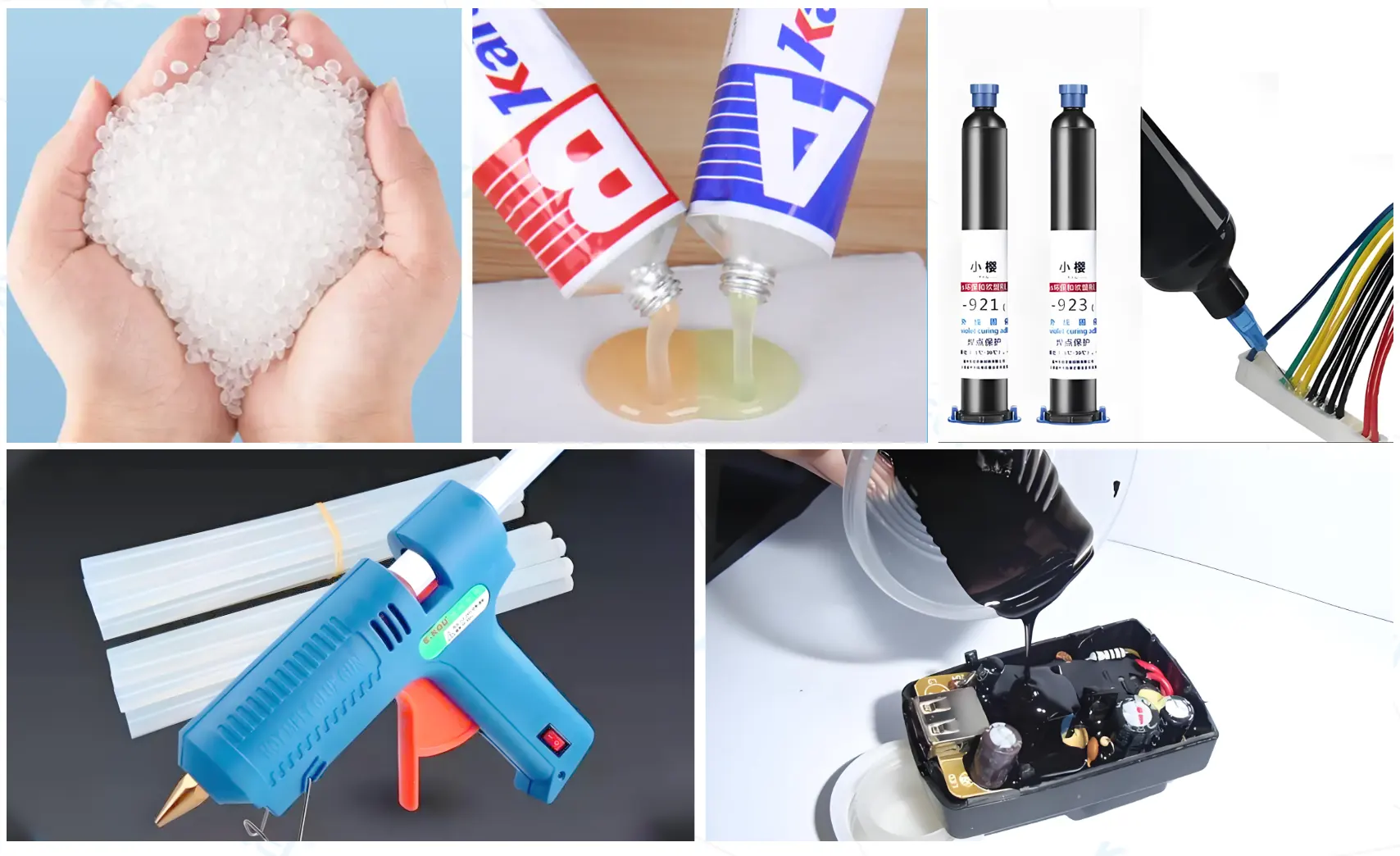
| Material | Advantages | Limitations | Typical Applications |
|---|---|---|---|
| Silicone | Excellent flexibility, wide temperature range (-60℃ to 200℃), strong aging resistance and reliable sealing performance | Higher material cost and more complex molding process | Automotive engine compartments, outdoor equipment |
| Two-component AB Epoxy Adhesive | Strong bonding performance, good insulation and excellent gap filling capability | Requires accurate mixing control and longer curing time | Automotive connectors, industrial wiring systems |
| UV Curing Adhesive | Fast curing speed and suitable for automated production | Limited temperature resistance and requires sufficient UV exposure | Consumer electronics, precision equipment |
| Hot Melt Adhesive | Fast processing, good filling performance and suitable for mass production | Lower high-temperature resistance | Compact electronic devices |
| Epoxy Potting Compound | High mechanical strength, vibration resistance and excellent insulation | Difficult repair after curing and higher cost | Industrial control systems, high-voltage harnesses |
How to Select the Right Waterproof Sealing Material?
The correct sealing material depends on the actual operating environment and product requirements.
For example:
- Automotive engine compartments usually require silicone or high-temperature sealing materials.
- Outdoor equipment often uses silicone sealing combined with IP67/IP68 connectors.
- Industrial equipment may require epoxy potting for stronger mechanical protection.
- Compact electronic products may prefer UV adhesive or hot melt solutions for efficient production.
Choosing the correct material during the design stage helps improve waterproof reliability and extend product service life.

3. Waterproof Cable Assembly Manufacturing Process
Waterproof performance depends not only on sealing materials but also on accurate manufacturing processes.
A professional waterproof cable assembly production process usually includes:
- Connector sealing design
- Terminal processing
- Waterproof molding
- Potting protection
- Quality inspection
3.1 Waterproof Connector Design
The connector is one of the most important waterproof protection points.
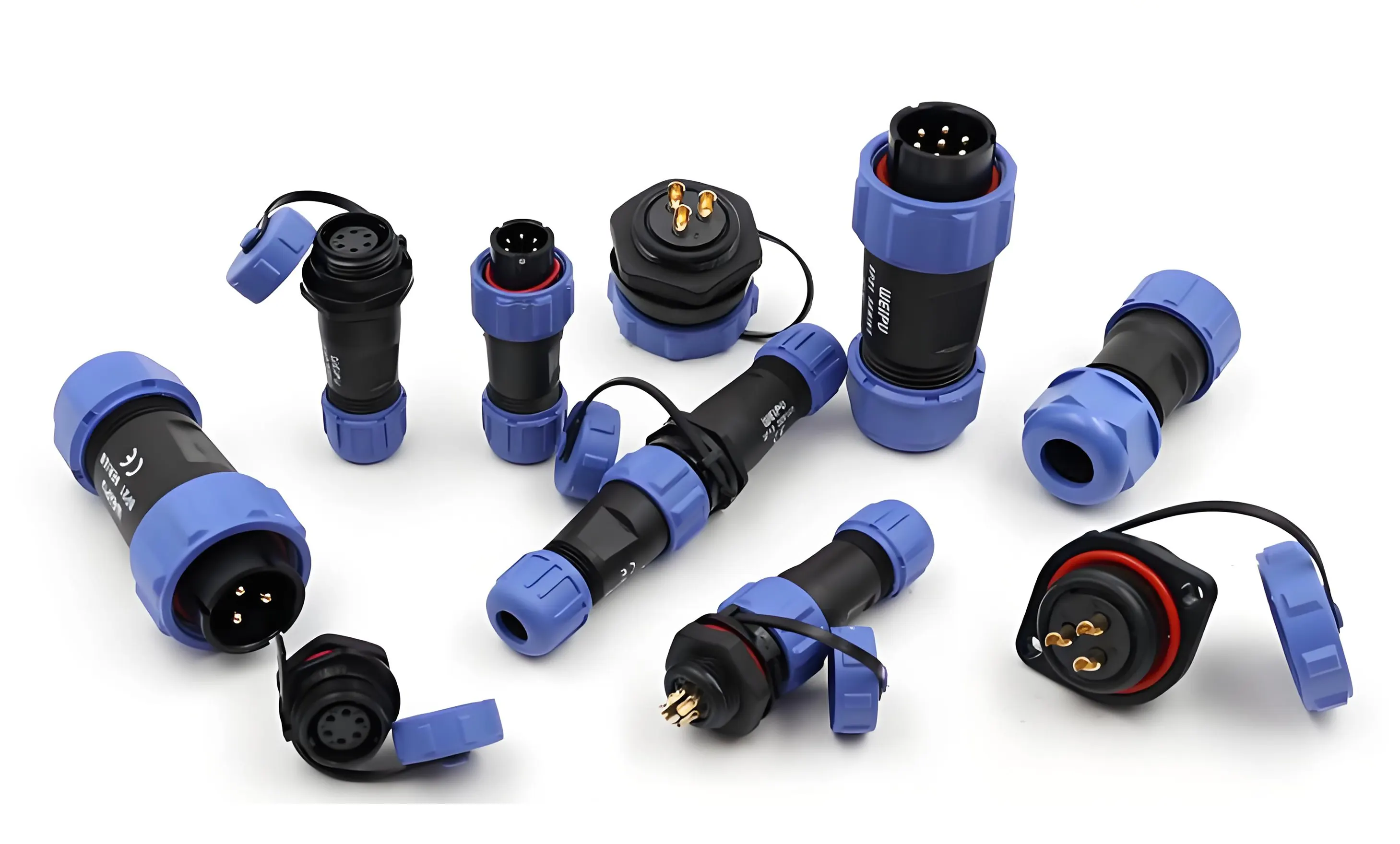
A waterproof connector typically includes:
- Sealing rings
- Waterproof plugs
- Cable seals
- Locking structures
The sealing performance depends on several factors:
Sealing Material
Common sealing materials include:
- Silicone rubber
- EPDM
- Fluorocarbon rubber
The material should match:
- Temperature requirements
- Chemical exposure
- Outdoor conditions
Cable Diameter Matching
The cable outer diameter must match the connector sealing structure.
Incorrect matching may cause:
- Insufficient sealing pressure
- Water leakage
- Reduced service life
Therefore, professional manufacturers verify cable specifications and connector compatibility during product development.
3.2 Overmolding Process
Overmolding is widely used for high-reliability waterproof cable assemblies.
During this process, protective material is directly molded around the cable and connector area to create an integrated sealing structure.
Common overmolding materials include:
- PVC
- TPU
- Silicone
Advantages include:
- Improved waterproof protection
- Better mechanical strength
- Increased resistance to bending and vibration
- Reduced risk of connector damage
Overmolding is commonly applied in:
- Automotive cable assemblies
- Industrial equipment wiring
- Outdoor electrical systems
3.3 Potting Protection Process
Potting uses sealing compounds to fill internal gaps and protect electrical components from moisture and vibration.
Common potting materials include:
- Epoxy resin
- Silicone gel
- Polyurethane
Potting provides:
- Excellent moisture protection
- Strong insulation performance
- Improved mechanical stability
It is widely used in:
- Battery wiring systems
- Industrial controllers
- High-voltage electrical assemblies
4. Understanding IP67 and IP68 Waterproof Protection Ratings
The waterproof performance of cable assemblies is commonly evaluated according to the IP (Ingress Protection) rating system established by the International Electrotechnical Commission (IEC).
An IP rating consists of two numbers:
IPXY
- The first digit (X) represents protection against solid particles such as dust.
- The second digit (Y) represents protection against water ingress.
For waterproof cable assemblies, the second digit is especially important because it determines the product’s water resistance capability.
4.1 Dust Protection Rating
The first IP digit ranges from 0 to 6.
| Level | Protection Description |
|---|---|
| 0 | No protection |
| 1-4 | Protection against solid objects of different sizes |
| 5 | Dust protected |
| 6 | Completely dust-tight |
For industrial and outdoor waterproof cable assemblies, IP6X protection is commonly preferred because dust contamination may affect electrical contacts and long-term reliability.
4.2 Waterproof Protection Rating
The second IP digit indicates the level of protection against water exposure.
| Level | Protection Description |
|---|---|
| IPX0 | No water protection |
| IPX1-IPX3 | Protection against dripping and spraying water |
| IPX4 | Protection against water splashes |
| IPX5 | Protection against water jets |
| IPX6 | Protection against powerful water jets |
| IPX7 | Protection against temporary immersion |
| IPX8 | Protection against continuous immersion under specified conditions |
IP67 vs IP68 Waterproof Cable Assembly Comparison
| Item | IP67 Cable Assembly | IP68 Cable Assembly |
|---|---|---|
| Dust Protection | Complete dust protection | Complete dust protection |
| Water Protection | Temporary immersion protection | Continuous immersion protection |
| Test Condition | Usually tested at 1 meter water depth for 30 minutes | Defined according to customer and manufacturer agreement |
| Typical Applications | Automotive, outdoor equipment, industrial systems | Marine equipment, EV systems, harsh environments |
A common misunderstanding is that IP68 means a product can operate underwater without limitations.
In reality, IP68 testing requirements must be clearly defined, including:
- Water depth
- Immersion duration
- Operating conditions
Therefore, selecting the correct waterproof rating should be based on the actual application environment rather than simply choosing the highest protection level.
5. Waterproof Cable Assembly Testing Methods
Waterproof testing is an essential quality control step to verify whether a cable assembly can maintain reliable protection during actual operation.
Professional cable assembly manufacturers usually combine multiple testing methods depending on product requirements and application conditions.

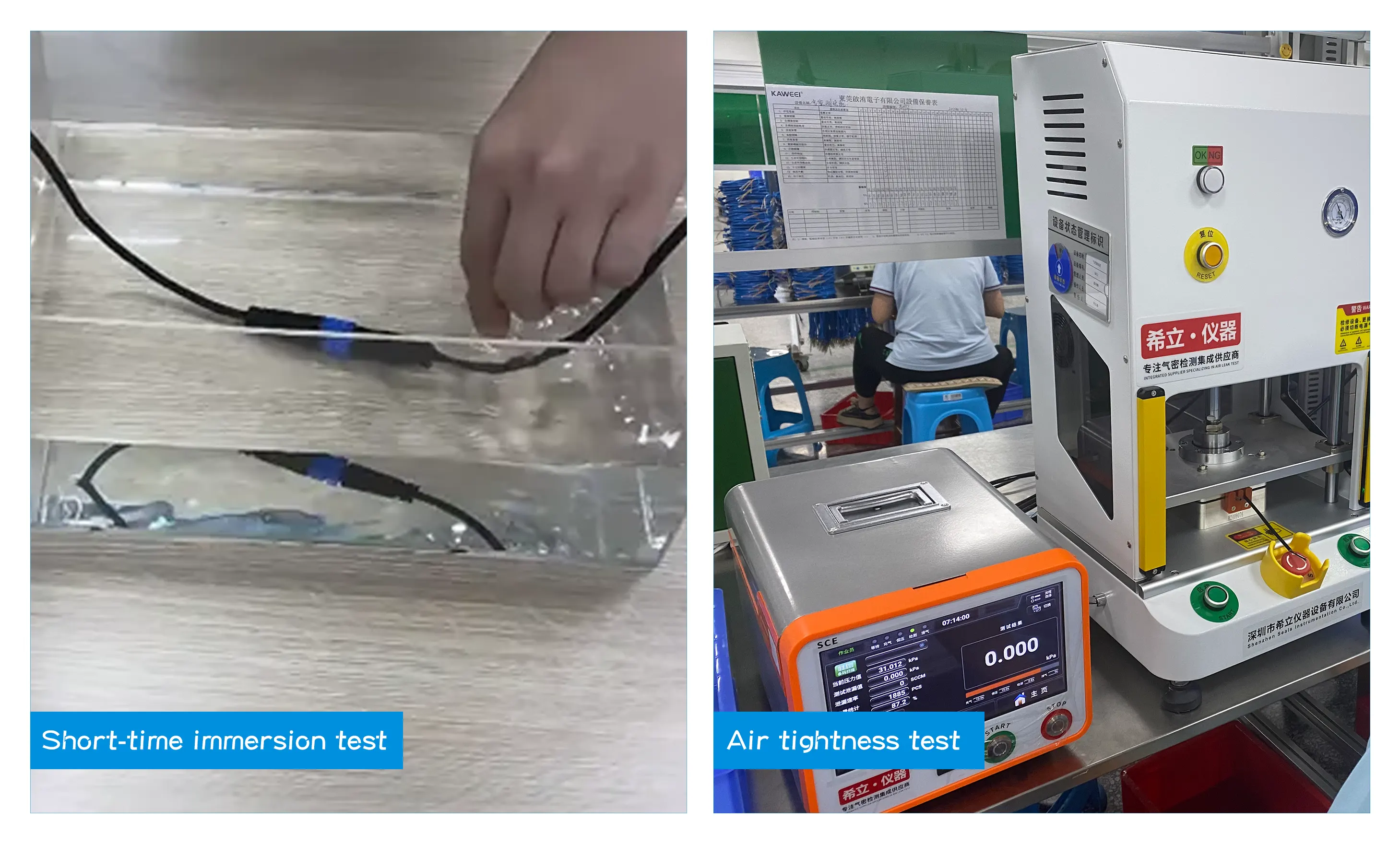
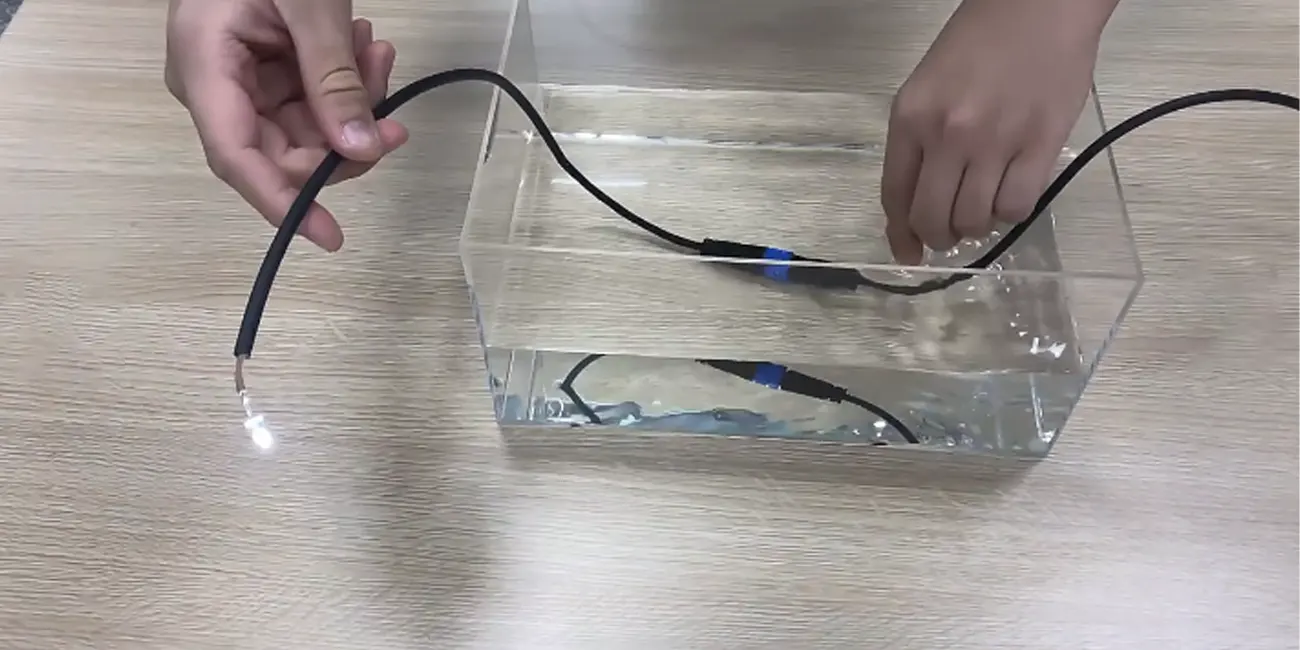
5.1 Water Immersion Test
The immersion test simulates real water exposure by placing the cable assembly into water for a specified period.
Advantages:
- Simple testing process
- Direct evaluation results
- Suitable for conventional waterproof verification
Limitations:
- May not detect extremely small leakage paths
- Requires sufficient testing time
For IP67 waterproof cable assemblies, the standard requirement is generally:
1 meter water immersion for 30 minutes.
For applications requiring higher reliability, manufacturers may perform additional customized immersion testing.
5.2 Airtightness Test (Air Pressure Test)
The airtightness test detects potential leakage by applying air pressure and monitoring pressure changes.
Compared with immersion testing, it provides higher sensitivity for identifying small sealing defects.
Advantages:
- Detects micro leakage
- Provides measurable test results
- Suitable for high-reliability applications
Typical Applications:
- New energy vehicle wiring harnesses
- Battery cable assemblies
- Industrial waterproof connectors
A qualified waterproof cable assembly should maintain pressure stability within the specified testing range according to product design requirements.
5.3 Electrical Performance Testing
Waterproof protection should not affect electrical performance.
Therefore, professional manufacturers also perform electrical inspections, including:
- Continuity testing
- Insulation resistance testing
- Hi-pot testing
- Terminal pull force testing
These tests help ensure stable electrical transmission, mechanical reliability and long-term product performance.
6. Custom Waterproof Cable Assembly Solutions
Different industries have different waterproof requirements.
A cable assembly used in an automotive engine compartment may require high-temperature sealing materials, while an outdoor industrial system may require stronger mechanical protection and higher IP ratings.
A professional custom wire harness manufacturer should provide solutions based on:
- Operating environment
- Electrical specifications
- Mechanical requirements
- Waterproof protection level
- Production requirements
Engineering Support
Custom waterproof cable assembly development usually includes:
Waterproof Design
- Waterproof connector selection
- Sealing structure design
- Cable specification matching
Manufacturing Capability
- Precision terminal crimping
- Overmolding process
- Potting protection
- Cable assembly production
Quality Control
- Waterproof testing
- Electrical testing
- Mechanical inspection
- Final product verification
From prototype development to mass production, experienced manufacturers help customers reduce development risks and achieve consistent product quality.

7. Frequently Asked Questions About Waterproof Cable Assemblies
What is the difference between IP67 and IP68 waterproof cable assemblies?
IP67 provides protection against temporary water immersion, typically tested at 1 meter depth for 30 minutes.
IP68 provides higher waterproof protection, but the exact testing conditions, including water depth and immersion duration, must be defined between the manufacturer and customer.
Can waterproof cable assemblies be customized?
Yes. Custom waterproof cable assemblies can be developed according to:
- Cable length
- Wire specifications
- Connector type
- Waterproof rating
- Operating environment
- Electrical requirements
Manufacturers can provide solutions based on customer drawings, samples or specific application requirements.
Which waterproof connector is suitable for outdoor applications?
The suitable connector depends on the operating environment.
For outdoor applications, connectors with IP67 or IP68 protection, reliable sealing structures and corrosion-resistant materials are commonly selected.
How long can a waterproof cable assembly last?
The service life depends on:
- Material quality
- Environmental conditions
- Mechanical stress
- Temperature exposure
- Manufacturing quality
A properly designed and manufactured waterproof cable assembly can provide reliable performance for many years in demanding environments.
Conclusion
Waterproof cable assemblies are essential components for electrical systems operating in challenging environments.
Reliable waterproof performance requires more than using waterproof connectors. It depends on the complete combination of:
- Proper sealing materials
- Optimized manufacturing processes
- Correct IP protection selection
- Professional waterproof testing
Choosing an experienced custom cable assembly manufacturer helps ensure reliable electrical performance, longer service life and consistent product quality.
Whether your project requires an IP67 waterproof cable assembly, an IP68 cable assembly, or a fully customized waterproof wire harness solution, professional engineering support can help develop a product that meets your application requirements.