When people picture automotive wiring, they picture the main loom — but vehicles consume far more cable assemblies at the module and point-to-point level: sensor leads, actuator cables, battery interconnects, lighting assemblies, charge-port harnesses. These smaller assemblies are where many suppliers start, and where quality discipline shows fastest. This guide covers the assembly types and what each demands.
The Assembly Families
- Sensor and actuator leads: single or few-circuit cables from sensor to connector — sealing, flex rating and signal integrity dominate (see our sensor cables guide).
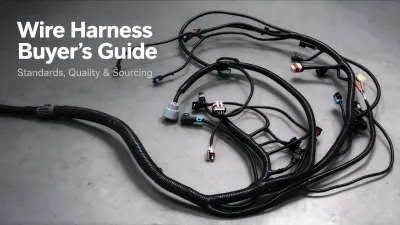
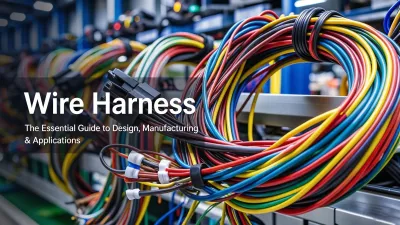
- Module harnesses: short looms internal to a module — door modules, seat assemblies, lighting units — built to the module maker's drawing with tight length tolerances.
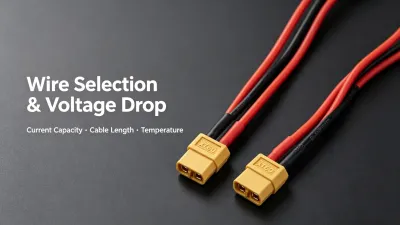
- Battery and power interconnects: large-cross-section cables with lugs or welded terminations, thermal-critical in EV applications.
- Sealed exterior assemblies: charge ports, trailer interfaces, exterior lighting feeds — IP-rated constructions with wire-seal systems.
- Data and antenna assemblies: camera, radar and connectivity links with controlled-impedance constructions.
What Custom Assembly Means in Practice
Custom in automotive is a locked-design discipline. The drawing defines wire specs, terminals, lengths, labels and tests; the manufacturer's job is reproduction with traceability. The process behind that: RFQ technical review with marked questions, material sourcing to part number with certificate retention, first-article verification, and production with calibrated crimp control, in-process inspection and 100% electrical test. For automotive programs the documentation chain — control plan, per-lot traceability, change control — is part of the product, not an extra.
Length Tolerance and Fit
Point-to-point assemblies live or die by length: too short strains terminations, too long creates loops that rub and rattle. Production cutting with automated tolerance control, plus routing-shape verification against a form board for shaped assemblies, keeps fit consistent across millions of units. This sounds trivial until a supplier without length discipline ships a lot that fits nothing.
Sealed Assembly Discipline
Exterior and wet-zone assemblies add the sealing chain — wire seals, housing seals, overmolds — where wire insulation diameter must match the seal spec exactly and seating verification is mandatory. A sealed assembly that passes electrical test can still leak; air-leak testing where the connector system supports it closes that gap. Our waterproof automotive harness guide covers the construction system.
Testing by Assembly Type
- All: 100% continuity, hipot, visual seating checks
- Signal assemblies: shield continuity, and for high-speed links, signal-integrity validation at design stage
- Power interconnects: milliohm recording and pull tests on crimps
- Sealed assemblies: air-leak or immersion verification per program requirements
Kaweei Automotive Assembly Manufacturing
Kaweei produces the full range of custom automotive cable assemblies from our Dongguan facility — module harnesses, sensor leads, sealed exterior builds and EV power interconnects — with automotive-grade documentation. Contact our team with your drawings; our custom automotive harness guide covers the loom-level programs.