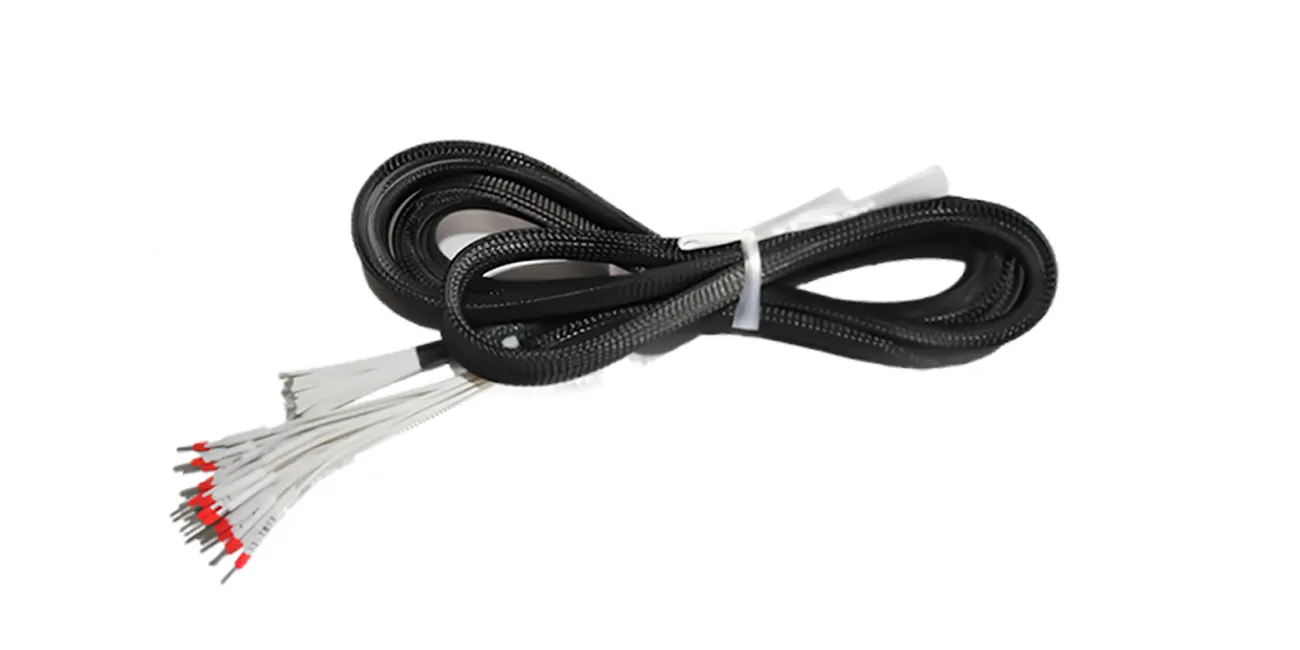
By quanyu lee
2025-12-03 09:22:22
Analysis of Anti-interference Scheme for Elevator Door Operator Wiring Harness
In modern elevator systems, the stability of the door operator's operation often determines the overall safety experience of the elevator. Behind the door operator system, the wiring harness, though not complex in structure, is crucial in its task of signal transmission and power distribution. If the door operator wiring harness is subjected to electromagnetic interference, the resulting malfunctions typically manifest as abnormal door opening and closing, command delays, sensor failures, or even false triggering. Therefore, designing interference-resistant wiring harnesses for elevator door operators has become a key issue that engineers must consider.
1. Why are door operator wiring harnesses susceptible to interference?
Door operator systems are located in a confined space at the top of the elevator car or near the door frame. They are surrounded not only by a large number of harmonics generated by the variable frequency drive (VVVF) but also by the high-frequency noise environment of the door operator motor itself. In addition, the dense wiring harness, short wiring distance, and frequent bends make them more susceptible to electromagnetic interference (EMI) and radio frequency interference (RFI).
Especially in older elevators, interference can increase exponentially if the outer sheath of the wiring harness is aged, the connectors are loose, or the shielding layer is damaged. This type of interference directly affects the door operator's sensor signals, such as door collision detection, door opening and closing speed feedback, and limit switches, resulting in phenomena such as "door operator moves but does not respond," "door moves erratically," or "suddenly stops during operation."
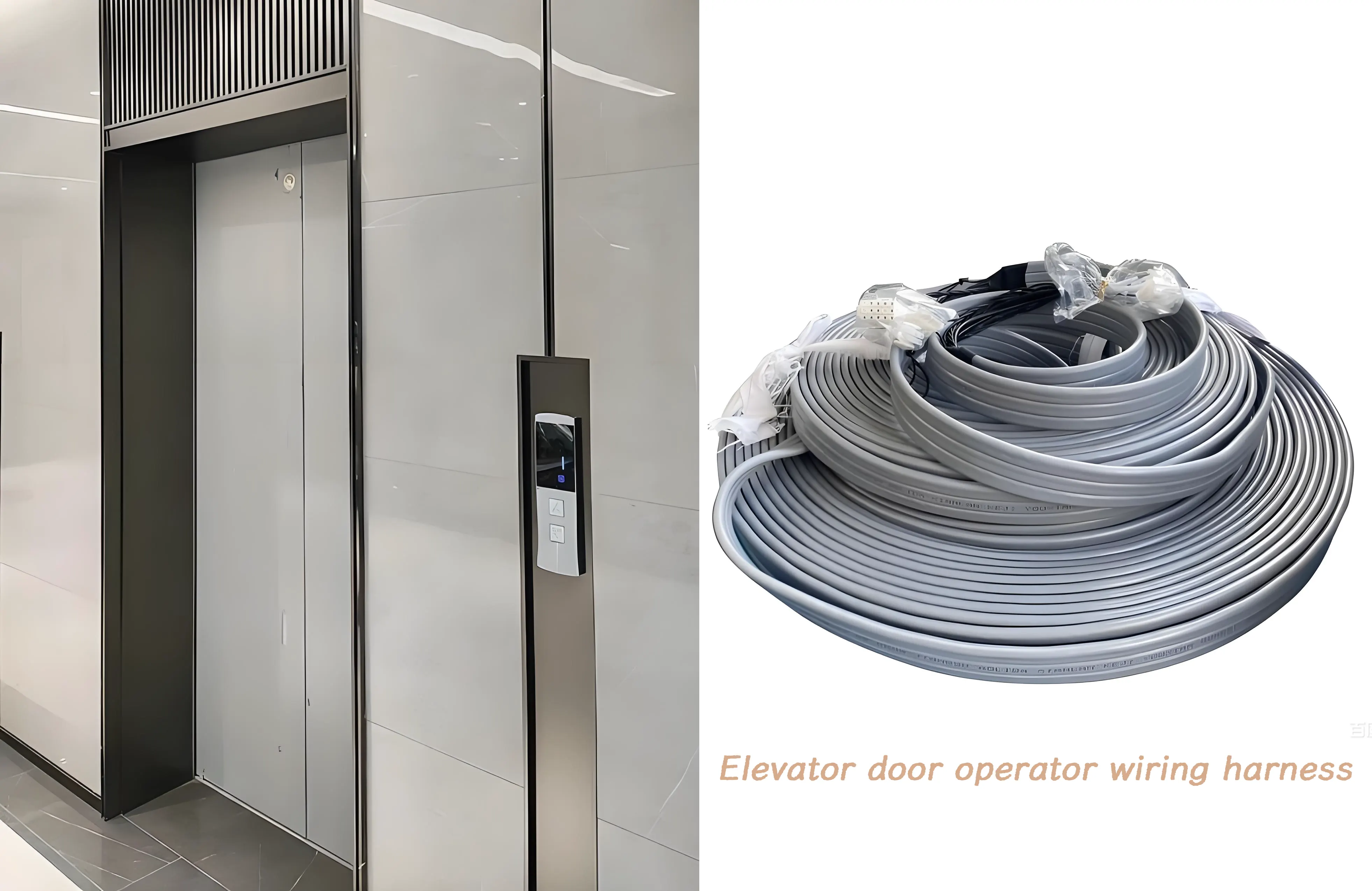
2. The most common sources of interference in elevator door operator wiring harnesses
In gantry crane systems, engineers typically encounter three main types of interference:
- One is electromagnetic coupling. For example, a large number of high-frequency components generated at the output of the frequency converter will couple to the door operator signal line, causing the weak signal to deviate.
- Secondly, a poor grounding circuit can easily cause a "ground potential difference" when the grounding between the car and the machine room is unstable, which in turn can interfere with the output of the sensors.
- Thirdly, there is mechanical noise, such as repeated bending and pulling of the wiring harness, which damages the shielding layer and makes it easier for interference to penetrate.
These disturbances tend to accumulate gradually, which is why the door operator failure rate often increases significantly after many elevators have been in use for more than five years.
3. Core Design Concept for Anti-interference of Door Machine Wiring Harness
To ensure the stable operation of the gantry crane, the anti-interference design of the wiring harness should focus on three aspects: structure, materials, and process.
First, a professional shielding solution should be adopted. For low-voltage signals, braided shielding or a composite shielding structure of aluminum foil and braid should be preferred to ensure effective shielding even in high-frequency environments. In cases where power and signal signals are mixed, a layered layout is necessary in the structural design to separate strong and weak current signals and prevent mutual coupling.
Secondly, there's the selection of wiring materials. Door operator wiring harnesses typically require flexible shielded cables with multi-strand, finely twisted copper wires as conductors to improve bending resistance and lifespan. Meanwhile, critical signal lines generally use a twisted-pair structure, creating opposing electromagnetic fields between the two conductors to reduce external noise at the source.
Finally, there's the termination process. High-quality door operator wiring harnesses must ensure the shielding layer is grounded 360°, not just at one point or left floating. Engineers must use metal-cased connectors or dedicated shielding clips to ensure shielding continuity. Furthermore, the plating of the connectors, crimping precision, and terminal locking force all directly affect interference immunity.

4. Installation and maintenance precautions for elevator door operator wiring harnesses
Interference suppression relies not only on the wiring harness itself, but also on proper installation and maintenance.
Key points for correct installation include:
- Avoid the friction of wiring harnesses near the gantry motor's transmission mechanism.
- The bending radius of all wiring harnesses should be greater than 10 times the outer diameter.
- It is strictly forbidden to bundle power lines and encoder lines together.
- Keep the wiring trough at the top of the gantry motor clean and dry.
- Regularly check for damage to the shielding layer and proper grounding.
Many "interference-related faults" are not caused by hardware damage, but by improper installation.
5. Cabling strategy: another key to interference immunity
Even with a well-designed wiring harness, the wiring method can still significantly impact the overall anti-interference performance. Good wiring typically includes the following principles:
The gantry crane wiring harness should be kept as far away as possible from high-frequency interference sources, such as frequency converters, electromagnets, or high-voltage cables. If complete separation is not possible, a metal partition or flexible metal conduit should be installed for secondary shielding. At the same time, the wiring harness should be kept smooth during cabling to avoid long, redundant loops, as these loops will act like "antennas," amplifying the noise acquisition range.
In addition, the grounding method of the gantry crane wiring harness is also crucial. It is generally recommended to use a single-point grounding strategy to avoid multiple potential loops between the traction machine, car, and machine room, which could cause signal drift.
6. Examples of Anti-interference Solutions for Typical Elevator Door Operators
Taking a common permanent magnet synchronous door operator as an example, its signal lines typically include door opening/closing feedback, limit switches, Hall effect signals, and encoder data. To ensure that these low-voltage signals are not interfered with, engineers usually adopt the following combination scheme:
Double-shielded flexible cables are used to handle all encoder and sensor signals; the door operator motor power line and signal line are laid out separately, maintaining a distance of at least 10cm; metal-cased connectors are used at the ends of the wiring harness, and the shielding layer is fully crimped; a dedicated metal cable tray is used on the top of the car to isolate the signal line from the power line.
This composite solution can typically significantly improve the gantry crane's anti-interference capability in complex environments, making elevator operation more stable and smooth.
7. Application Practices in Door Operator Wiring Harnesses
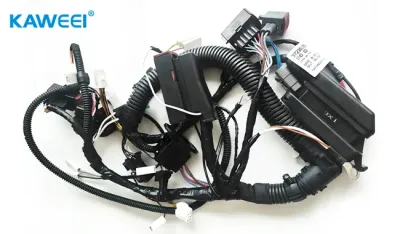
Among numerous elevator manufacturers and maintenance companies, many have begun using customized door operator wiring harness solutions provided by Kaweei Wiring Harness Customization Factory. This factory specializes in the customized R&D of industrial wiring harnesses, offering comprehensive wiring harness solutions that combine shielding, flexibility, bending resistance, and interference resistance based on the door operator's structure. Through more precise shielding design, longer-life conductor materials, and stringent termination processes, their products significantly reduce door operator malfunctions and signal noise issues in practical applications.
8. Common Interference Problems and Solutions
The following are the most common interference problems in gantry crane systems and quick troubleshooting suggestions.
① Encoder signal is intermittent
Check the grounding of the shielding layer and rewire to avoid proximity to the motor.
② The door operator's movement is shaky, or the speed is unstable
Replace the ordinary signal cable with a double-shielded cable.
③ Door lock signal false triggering
Add optocoupler isolation to the door lock signal.
④ Door operator door opening/closing position offset
Check the twisted pair structure and capacitor specifications of the encoder wiring harness.
⑤ Interference causes the elevator to stop or the door zone recognition to fail
Check if the power line runs parallel to the low-voltage line.
All these phenomena are directly related to "interference resistance." The stable operation of elevator door operator systems highly depends on high-quality, interference-resistant wiring harness solutions. From the structural design and material selection of the wiring harness to shielding, grounding, and wiring, every aspect determines whether the door operator can maintain accurate operation in a high-interference environment.
With the continuous development of elevator technology, interference-resistant wiring harnesses will become a key foundation for the long-term stable operation of door operator systems.