Table of Contents
- 1. What Is an Electric Vehicle Wire Harness?
- 2. Main Types of EV Wire Harnesses
- 3. EV Wire Harness Materials & Professional Protection Design
- 4. EV Wire Harness Manufacturing Process
- 5. EV Wire Harness Testing & Automotive-Grade Quality Control
- 6. Real Engineering Project Cases
- 7. How to Choose a Reliable EV Wire Harness Manufacturer
- 8. Frequently Asked Questions About EV Wire Harnesses
- Custom EV Wire Harness Solutions for Global Clients
By quanyu lee
2024-12-13 03:20:16
Electric Vehicle Wire Harness: High Voltage, Low Voltage & Dashboard Harness Solutions
Electric vehicles are evolving toward higher intelligence and stronger connectivity, yet every advanced electric vehicle still relies on a stable, safe, and reliable electrical connection system.
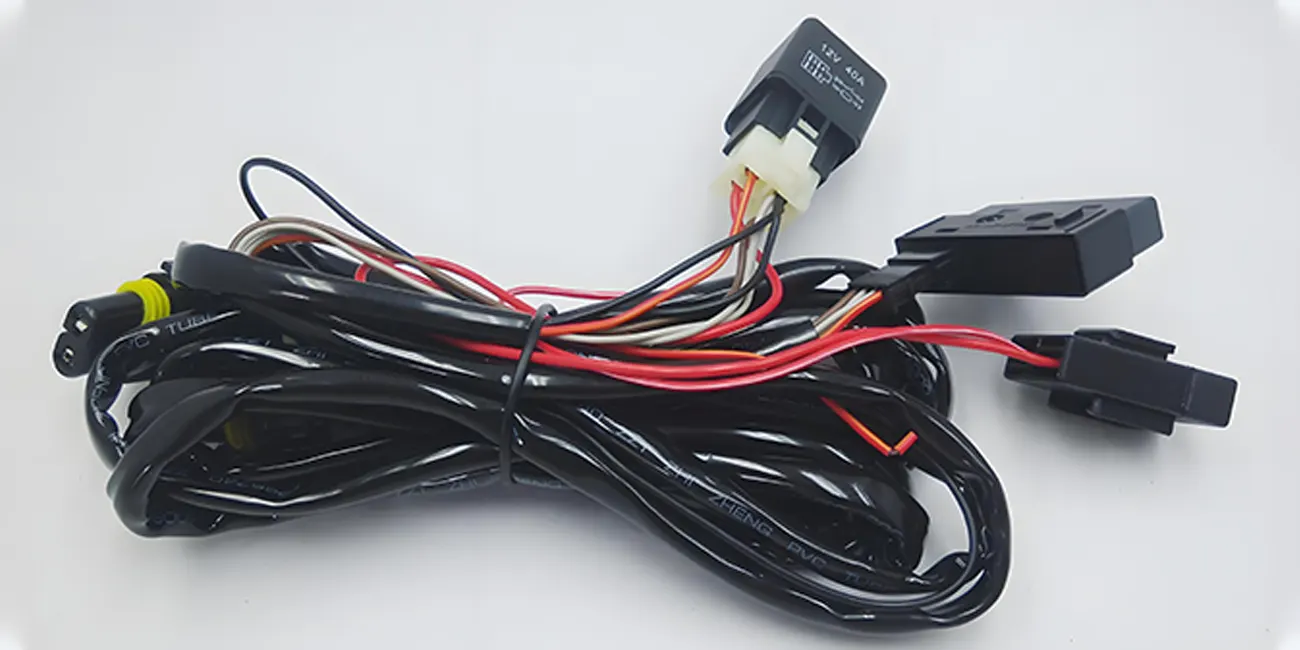
An electric vehicle (EV) wire harness refers to a complete and integrated wiring system that interconnects battery packs, electric motors, inverters, charging systems, vehicle control units, dashboards, sensors, and other automotive electronic components. It undertakes core functions including whole-vehicle power distribution, real-time signal transmission, and multi-system collaborative communication, serving as the fundamental electrical backbone of modern electric vehicles.
Compared with traditional automotive wiring harnesses, electric vehicle wiring harnesses face more stringent industry requirements. The widespread adoption of high-voltage vehicle platforms, fast-charging technologies, and intelligent driving systems demands superior insulation performance, enhanced electromagnetic protection, and long-term operational reliability against extreme vibration, high temperature, moisture, and harsh working conditions.
A professionally engineered custom EV wire harness solution involves far more than simple cable and connector matching. It requires systematic engineering expertise covering precise cable selection, professional electrical design, rational routing optimization, accurate connector matching, customized protection solutions, and standardized manufacturing quality control.
As a professional custom wire harness manufacturer, we deliver tailored EV wiring harness solutions for passenger electric vehicles, commercial electric vehicles, new energy battery systems, and intelligent cockpit scenarios. From prototype development and sample verification to large-scale mass production, our experienced engineering team cooperates closely with global customers to develop reliable, production-ready wire harness solutions that fit diverse project requirements.
1. What Is an Electric Vehicle Wire Harness?
An electric vehicle wire harness is a standardized, integrated electrical connection network exclusively designed for electric vehicles. Instead of scattered and disorderly independent wiring, it organizes hundreds of complex vehicle circuits into a complete, structured, and modular assembly. This scientific structural design effectively improves overall vehicle electrical safety, simplifies automotive assembly processes, and greatly enhances production efficiency and post-sales maintainability.
A full-set EV wiring harness system covers all core electrical modules of electric vehicles, including the following mainstream types:
-
Battery pack harness
-
Motor and inverter connecting cables
-
AC/DC charging system harness
-
Intelligent dashboard wiring harness
-
Vehicle body low-voltage harness
-
Vehicle sensor signal harness
-
Vehicle network communication cables
Different EV wire harness types undertake differentiated functional tasks: high-voltage power harnesses are responsible for the core power transmission of the entire vehicle, while low-voltage control and communication harnesses dominate daily vehicle functional operations and real-time signal interaction between various electronic modules. Modern EV wire harness design must perfectly balance electrical performance, mechanical durability, lightweight optimization, safety protection, and mass production efficiency.
2. Main Types of EV Wire Harnesses
Although mainstream automakers adopt differentiated vehicle electrical architectures, electric vehicle wiring harnesses are professionally classified into three core categories based on functional attributes and voltage levels, fully covering all power supply, vehicle control, and intelligent driving application scenarios of modern electric vehicles.
2.1 High-Voltage Wire Harness
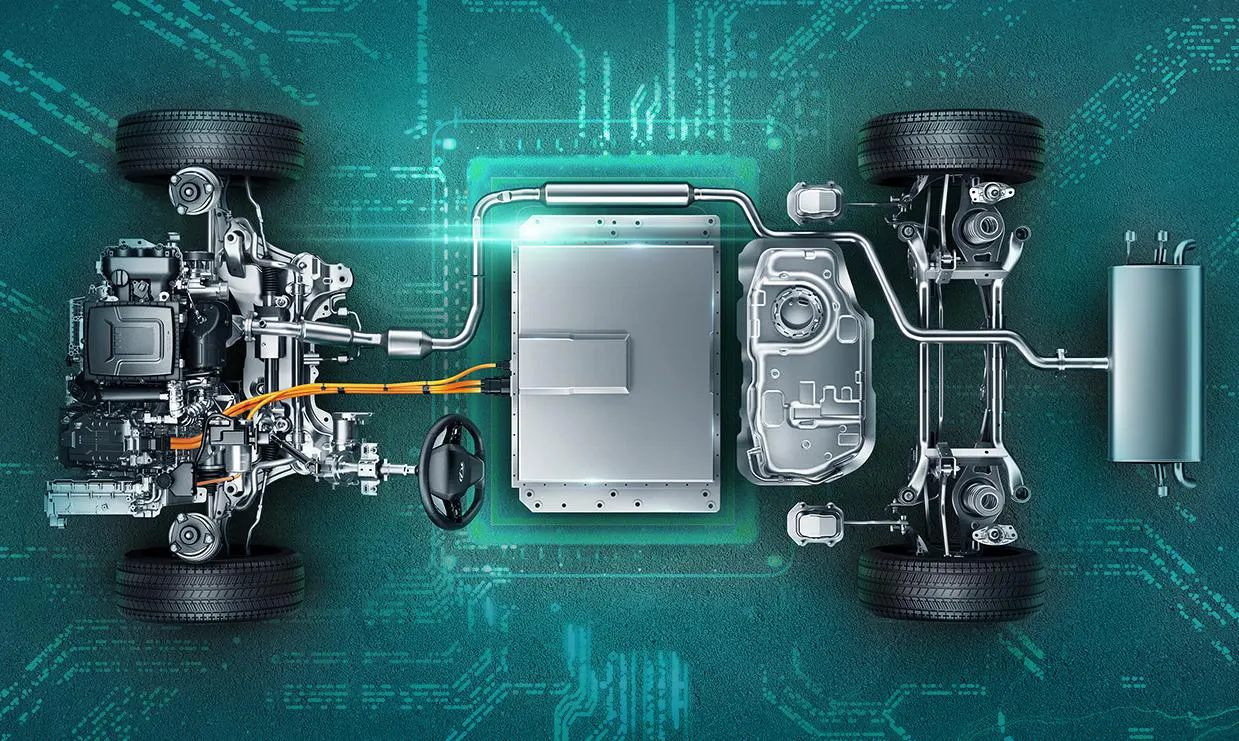
The high-voltage wire harness serves as the core power transmission system of electric vehicles, supporting the stable operation of the entire vehicle power system. It connects all key high-voltage power components of EVs, including:
-
Battery pack
-
Vehicle inverter
-
Electric drive motor
-
On-board charger (OBC)
-
DC/DC converter
-
Power distribution unit (PDU)
Most mainstream new energy vehicle platforms adopt 400V or 800V high-voltage architectures, which put forward ultra-high requirements for the current-carrying capacity, insulation performance, and long-term operational safety of high-voltage harnesses. Compared with conventional automotive wires, EV high-voltage harnesses feature professional material selection and multi-dimensional safety design:
High-Performance Insulation Materials
High-voltage EV harnesses mainly adopt XLPE and silicone rubber insulation materials, delivering outstanding advantages including excellent high-temperature resistance, superior electrical insulation, chemical corrosion resistance, and long-term anti-aging performance, adapting to harsh under-chassis and engine compartment operating environments.
Strong Multi-Layer Protection Design
Most high-voltage cables are laid on the vehicle chassis, enduring frequent water splashing, long-term road vibration, dust erosion, and mechanical impact. To solve these pain points, we adopt comprehensive protective solutions including corrugated protective tubes, wear-resistant braided sleeves, and IP-rated waterproof connectors to ensure long-term stable operation of high-voltage wiring systems.
Professional EMI Shielding Structure
High-current operation of EV high-voltage systems easily generates electromagnetic interference (EMI), which disturbs the signal accuracy of vehicle sensors and intelligent driving systems. To optimize vehicle EMC electromagnetic compatibility, EV high-voltage harnesses are equipped with aluminum foil shielding, copper braided shielding, or composite multi-layer shielding structures to eliminate signal interference risks.
2.2 Low-Voltage & Dashboard Wire Harness
While high-voltage harnesses undertake vehicle power output, low-voltage wiring harnesses control all daily functional operations and auxiliary systems of electric vehicles. As the most widely used and structurally complex harness type, it covers diversified vehicle application scenarios:
-
Intelligent dashboard and instrument cluster systems
-
Vehicle interior lighting and air conditioning systems
-
Vehicle door control modules and body accessories
-
Vehicle body sensors and detection modules
-
Vehicle infotainment systems and smart cockpit equipment
With the rapid iteration of vehicle intelligence, dashboard wire harnesses have become increasingly critical. Modern smart cockpits integrate high-definition digital displays, touch control systems, vehicle cameras, voice interaction devices, HUD head-up displays, and wireless charging modules, raising higher standards for harness layout compactness, signal transmission stability, assembly convenience, and functional scalability.
We adopt a modular low-voltage harness design with reserved expansion connectors, supporting subsequent intelligent function upgrades without overall electrical system redesign. This design greatly improves the flexibility and service life of vehicle electrical architectures.
2.3 Vehicle Communication Harness
Vehicle communication harnesses are the core information transmission carrier of intelligent electric vehicles, directly determining the response speed and operation accuracy of autonomous driving and vehicle networking systems.
Traditional fuel vehicles and early new energy vehicles mainly rely on CAN Bus and LIN Bus communication protocols. With the upgrading of intelligent driving technology, modern smart electric vehicles are widely equipped with high-speed CAN FD and Automotive Ethernet communication harnesses, which support the stable operation of advanced intelligent systems:
-
ADAS advanced driver assistance systems
-
Vehicle camera and radar sensor signal transmission
-
High-precision autonomous driving functions
-
Vehicle OTA remote upgrade and real-time data interaction
Different from ordinary power wiring harnesses, communication harnesses have strict control standards for signal stability, impedance consistency, shielding performance, and connector precision. They effectively avoid signal delay, data loss, and electromagnetic interference, ensuring the safe and stable operation of intelligent vehicle systems.
3. EV Wire Harness Materials & Professional Protection Design
The comprehensive performance and service life of EV wire harnesses depend on scientific material selection and standardized protection design. Different parts of electric vehicles face completely different operating environments: engine compartments suffer from high-temperature erosion, chassis parts endure continuous vibration and water splashing, and cockpits require compact and stable wiring layout. Targeted matching of insulation, shielding, and protection materials is the key to ensuring long-term harness reliability and realizing vehicle lightweight design.
Professional wire harness manufacturers select differentiated wire materials according to harness voltage level, installation position, and mechanical performance requirements, balancing safety, durability, and cost-effectiveness for diverse EV application scenarios.
Common Insulation Materials for EV Wire Harnesses
|
Material
|
Typical Application
|
Main Advantages
|
|
XLPE
|
High-voltage battery, motor, and chassis cables
|
Excellent heat resistance, ultra-high electrical insulation, anti-aging performance, and long service life
|
|
Silicone Rubber
|
Battery pack and high-temperature engine compartment harnesses
|
Super flexibility, stable electrical and mechanical performance under extreme high and low temperatures
|
|
PVC
|
Dashboard and vehicle body low-voltage wiring harnesses
|
Cost-effective, easy to process and assemble, suitable for conventional low-voltage circuit scenarios
|
Electromagnetic interference protection is another core design highlight of high-quality EV harnesses. Core vehicle components including battery packs, inverters, and drive motors generate continuous electromagnetic noise during operation, which will interfere with the signal transmission of precision sensors and intelligent driving equipment without professional shielding protection. The industry universally adopts aluminum foil shielding, copper braided shielding, or composite double-layer shielding structures to optimize whole-vehicle EMC performance and ensure signal accuracy.
In addition, all EV high-voltage cables adopt a unified orange outer sheath identification, enabling assembly and maintenance personnel to quickly identify high-voltage dangerous circuits, effectively avoiding safety risks and improving vehicle operation and maintenance safety.
Typical Harness Protection Solutions
|
Protection Method
|
Core Purpose
|
|
Corrugated tubing
|
Prevent cable abrasion and resist long-term vehicle vibration damage
|
|
Braided sleeve
|
Improve harness wear resistance while maintaining structural flexibility
|
|
Aluminum foil shielding
|
Effectively reduce electromagnetic interference and stabilize signal transmission.
|
|
Copper braid shielding
|
Optimize EMC grounding performance and enhance anti-interference capability.
|
|
Waterproof connectors
|
Prevent moisture and dust from invading connection terminals and causing circuit failure
|
4. EV Wire Harness Manufacturing Process
The production and manufacturing of high-quality automotive-grade EV wire harnesses is a systematic and standardized project, covering full-link processes including engineering design review, prototype verification, standardized mass production, and finished product precision testing. Far more sophisticated than ordinary civil wire harness processing, it requires strict whole-process process control to meet strict automotive-grade quality standards.
The entire manufacturing process starts with professional engineering review. Our engineers conduct in-depth technical evaluation according to customer design drawings, electrical parameter indicators, connector specifications, and vehicle installation environment. We optimize cable length, bending radius, branch layout, and overall protection schemes in advance to avoid structural defects and assembly problems in mass production, reducing project modification costs.
Prototype verification is an indispensable core link in EV harness development. Through sample production and vehicle pre-installation testing, we verify connector matching accuracy, wiring routing rationality, and environmental adaptability, completing all design optimization before large-scale mass production to ensure project stability and reliability.
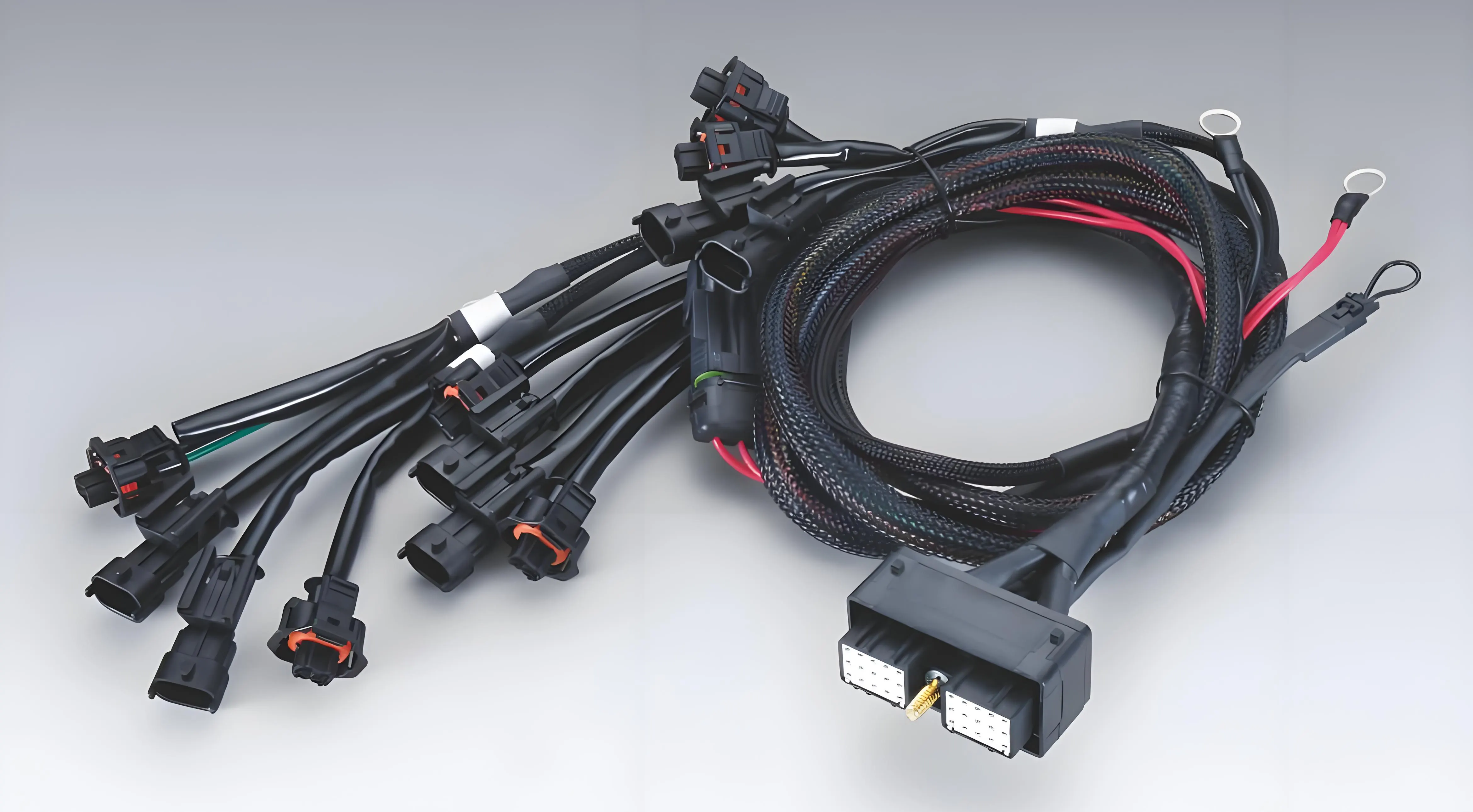
After prototype confirmation and customer approval, the project enters standardized mass production. The core production procedures include precise wire cutting, automatic insulation stripping, high-precision terminal crimping, precise connector assembly, protective structure installation, and overall harness arrangement and shaping.
Complete standardized production flow: Engineering Review → Prototype Validation → Precision Wire Processing → Terminal Crimping → Harness Assembly → Electrical Performance Testing → Finished Product Inspection & Shipment.
Terminal crimping is the most critical quality control point in the entire production process. High-precision crimping ensures stable electrical conductivity and excellent mechanical tensile strength of terminals, effectively avoiding hidden dangers such as increased circuit resistance, local overheating, and loose connection failure during long-term vehicle operation.
5. EV Wire Harness Testing & Automotive-Grade Quality Control
The reliability of EV wire harnesses is directly related to vehicle driving safety and overall service life. A complete vehicle harness contains hundreds of wires and connection terminals, and any tiny processing defect may cause signal failure, power interruption, or potential safety hazards. Therefore, professional automotive-grade testing and strict whole-process quality control are essential for EV wire harness production.
We abandon single visual inspection and adopt a full-dimensional testing system covering electrical performance, mechanical performance, and environmental adaptability, ensuring all finished harnesses meet strict EV operating standards. We formulate differentiated testing standards for high-voltage, low-voltage, and communication harnesses according to their actual application scenarios and performance requirements.
Core Testing Items for EV Wire Harnesses
|
Test Method
|
Testing Purpose
|
|
Continuity Test
|
Verify accurate circuit connection, eliminate open circuit, short circuit, and wrong wiring problems.
|
|
Insulation Resistance Test
|
Detect overall insulation performance to prevent electrical leakage and potential safety risks.
|
|
Hi-Pot High Voltage Test
|
Verify the harness's high-voltage breakdown resistance and ensure high-voltage system operational safety.
|
|
Terminal Pull Force Test
|
Detect terminal crimping firmness and ensure mechanical stability under long-term vehicle vibration.
|
|
Waterproof & Dustproof Test
|
Verify the environmental adaptability of connectors and protective structures in harsh working conditions.
|
|
Visual & Dimensional Inspection
|
Check assembly accuracy, wiring standardization, and overall product consistency.
|
Authoritative Automotive Quality Standards
All our EV wire harness products strictly comply with global authoritative automotive industry standards to ensure cross-market adaptability and customer trust:
-
IATF 16949 automotive quality management system certification
-
IPC/WHMA-A-620 wire harness assembly workmanship specification
-
RoHS & REACH environmental protection compliance standards
-
Customized customer vehicle inspection and verification specifications
We implement full-process closed-loop quality control from material incoming inspection, in-process production monitoring, to finished product delivery inspection, realizing full production link traceability, effectively reducing defective rates, and ensuring long-term stable and consistent product quality.
6. Real Engineering Project Cases
Professional manufacturing strength and technical advantages are fully reflected in practical project solutions. Different EV application scenarios face differentiated technical challenges: commercial electric vehicles prioritize high-load durability and extreme environmental adaptability, while intelligent cockpit projects focus on signal stability and functional scalability. The following classic cases demonstrate our targeted engineering optimization capabilities.
Case 1: High-Voltage Harness Optimization for Commercial Electric Vehicles
A commercial EV manufacturer encountered multiple technical pain points with its original high-voltage harness: long-term high-load outdoor operation caused high-temperature aging risks, persistent vehicle vibration led to hidden connection looseness hazards, and high-current operation interfered with low-voltage signal stability.
Our engineering team formulated targeted optimization solutions focusing on material upgrading, shielding performance improvement, and routing structure adjustment:
|
Project Challenge
|
Professional Engineering Solution
|
|
Long-term high-temperature exposure and aging
|
Upgrade high-temperature resistant XLPE insulation materials to improve overall thermal stability
|
|
Electromagnetic interference and signal disorder
|
Adopt composite multi-layer shielding structure to optimize EMC electromagnetic compatibility
|
|
Continuous vehicle vibration and mechanical stress
|
Optimize harness routing and fixed point layout to reduce vibration fatigue damage
|
After sample verification and real vehicle road testing, the optimized high-voltage harness fully adapts to high-load outdoor working conditions, featuring stable power transmission and zero signal interference, and has been successfully applied to the customer's mass production projects.
Case 2: Intelligent Cockpit Dashboard Harness Upgrade
With the iterative upgrading of vehicle intelligent functions, a customer's original old-generation dashboard harness suffered from insufficient expansion space, single functional support, and poor signal stability, failing to adapt to the new-generation intelligent cockpit configuration upgrade requirements.
Aiming at the core pain points of limited installation space and multi-module collaborative signal interaction, our team completed the overall optimization and upgrade of the dashboard harness:
|
Project Challenge
|
Optimization Solution
|
|
Limited cockpit installation space
|
Optimize compact harness layout to maximize space utilization
|
|
Subsequent intelligent function upgrade demands
|
Adopt modular design with reserved expansion connectors
|
|
Multi-module cross signal interference
|
Optimize signal routing paths and strengthen targeted shielding protection
|
The upgraded dashboard harness supports the full-load operation of smart cockpit equipment such as high-definition displays and multi-function sensors, realizing stable multi-signal transmission and convenient assembly and maintenance, successfully helping customers complete product iteration and technical upgrading.
7. How to Choose a Reliable EV Wire Harness Manufacturer
EV wire harness is a core safety component of new energy vehicles, and a supplier's comprehensive strength directly determines product quality stability and project long-term reliability. A qualified excellent manufacturer must possess professional engineering design capabilities, complete prototype verification systems, standardized mass production capacity, and strict quality control systems, rather than only providing simple processing and assembly services.
Global EV vehicle manufacturers and project customers mainly focus on the following core capabilities when evaluating and selecting wire harness suppliers:
7.1 Full-Cycle Engineering Customization Support
Reliable EV harness project cooperation starts with early-stage design intervention. Our professional engineering team provides one-stop full-cycle technical services including drawing review, scheme optimization, electrical parameter matching, and project risk prediction according to customer project requirements, effectively reducing design modification costs and shortening the whole cycle from prototype trial production to mass production.
7.2 Flexible Customization & Prototype R&D Capability
Different vehicle models and application scenarios have completely differentiated harness customization requirements. We support personalized customization of cable length, structural scheme, connector brand & specification, and voltage & current parameters, covering prototype sample trial production, small-batch testing, and large-scale mass production, fully meeting the differentiated R&D and manufacturing needs of new energy vehicle enterprises.
7.3 Stable Automotive-Grade Quality Control System
We strictly abide by the IATF 16949 automotive quality management system and IPC/WHMA-A-620 harness assembly standards, implementing full-process quality monitoring from material incoming inspection, in-process production supervision, to finished product delivery. We ensure consistent product quality in long-term mass production and can provide complete test reports and qualification certificates to support customer project certification and batch delivery.
8. Frequently Asked Questions About EV Wire Harnesses
Q1: What is an EV wire harness?
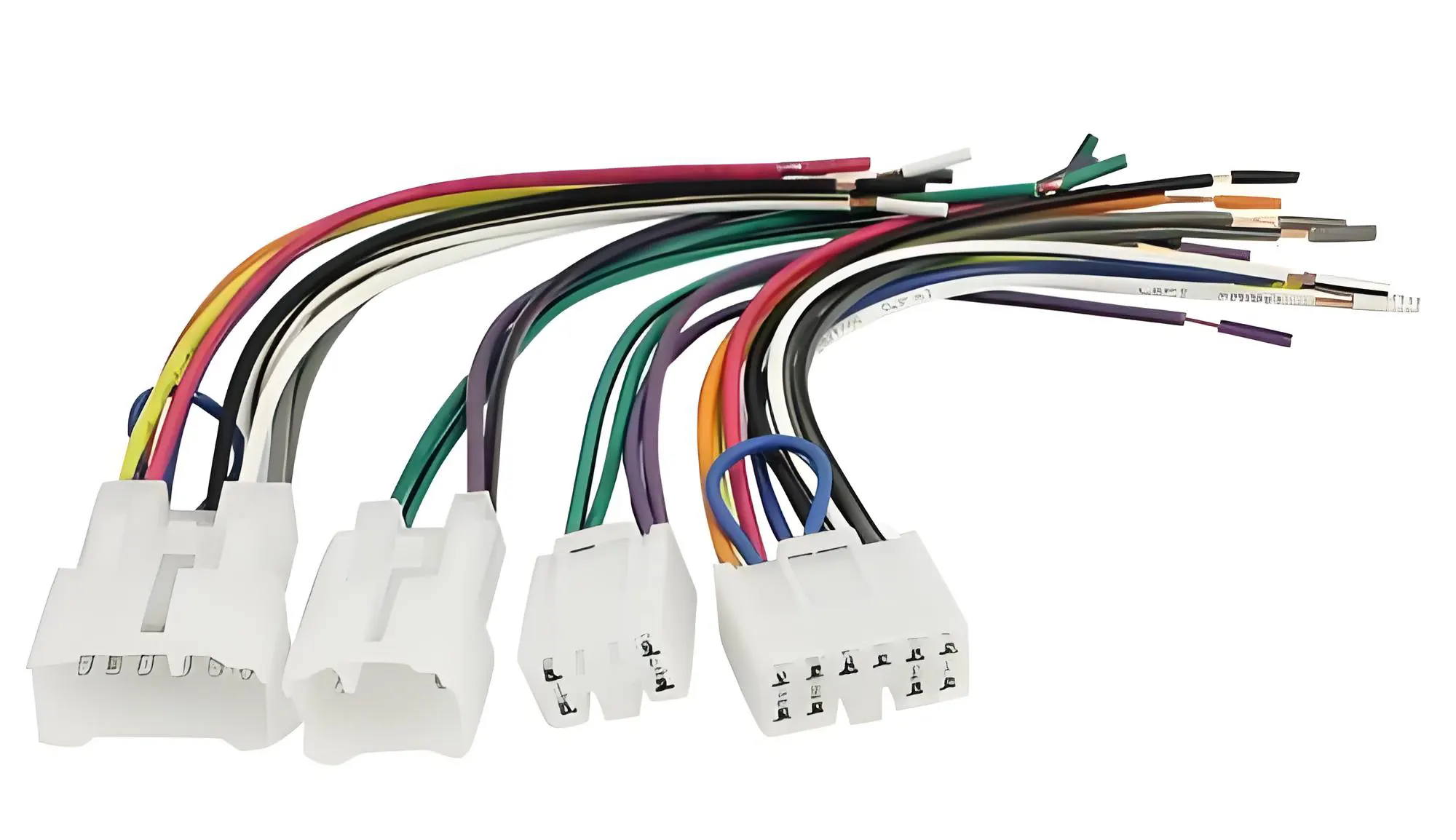
An EV wire harness is a standardized integrated assembly composed of wires, terminals, connectors, and multi-layer protective structures. It connects all electrical systems of electric vehicles, realizes whole-vehicle power distribution and multi-module signal collaborative communication, and serves as the core electrical infrastructure of new energy vehicles.
Q2: What is the difference between EV high-voltage and low-voltage harnesses?
High-voltage harnesses are mainly used for core vehicle power transmission, connecting batteries, motors, and charging systems, requiring ultra-high insulation performance, high voltage resistance, and multi-dimensional safety protection. Low-voltage harnesses focus on vehicle functional control and signal transmission, featuring complex circuit distribution and high requirements for assembly precision and long-term signal stability.
Q3: Why are EV high-voltage cables orange?
Orange is the unified safety identification color for automotive high-voltage cables. It can quickly remind assembly and maintenance personnel of high-voltage dangerous circuits, effectively avoiding accidental contact safety risks and improving vehicle assembly, inspection,n and maintenance safety.
Q4: What are the mainstream materials for EV wire harnesses?
The three mainstream application materials are XLPE, silicone rubber, and PVC. XLPE is widely used in high-voltage harnesses for excellent heat resistance and electrical insulation; silicone rubber adapts to extreme temperature working scenarios with super flexibility; PVC features high cost performance and is commonly used in low-voltage cockpit and vehicle body harnesses.
Q5: Can EV wire harnesses be fully customized?
Yes. We provide full-scale personalized custom EV wire harness solutions, including customized cable specifications, connector types, protection levels, structural layouts, and overall dimensions, supporting full-process project services from new energy vehicle prototype development to mass production delivery.
Custom EV Wire Harness Solutions for Global Clients
With the continuous upgrading of EV high-voltage platforms and intelligent driving technologies, customized, high-safety, and high-reliability wire harness solutions have become the core market demand of the new energy vehicle industry. We focus on the R&D and customized manufacturing of high-quality EV wire harnesses, providing professional and reliable wiring solutions for passenger cars, commercial vehicles, new energy storage systems, and intelligent cockpit scenarios.
To acquire your exclusive customized EV wire harness solution, please provide your detailed project requirements as follows:
-
Specific vehicle or equipment application scenarios
-
Harness voltage and current parameter specifications
-
Connector model and brand requirements
-
Product design drawings, samples, es or technical documents
-
Expected production volume and delivery cycle
Our professional engineering team will provide one-on-one technical evaluation and tailor cost-effective, stable, and reliable custom EV wire harness solutions for your project.