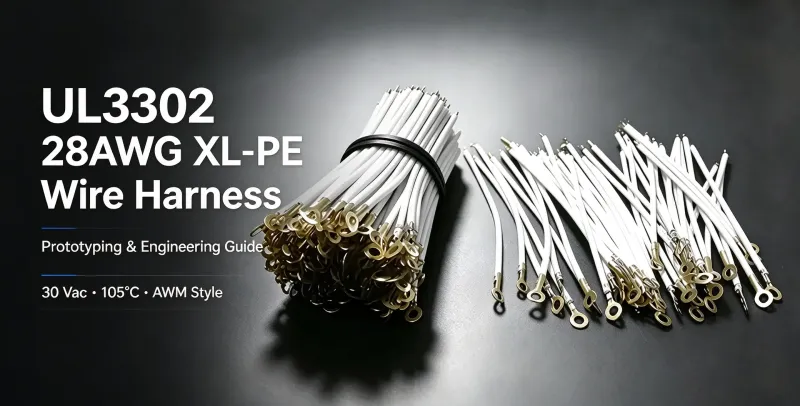
During precision wire harness prototyping, connector selection is only one part of the design. Wire insulation material, conductor construction, outer diameter, crimp compatibility, and environmental adaptability also need comprehensive evaluation before mass production release. These factors affect electrical performance, mechanical durability, connector compatibility, and manufacturing consistency during prototype and mass production for miniature precision harnesses used in medical devices, industrial controls, automotive electronics, and compact consumer equipment.
For miniature connector-equipped compact electronic systems, UL3302 28AWG XL-PE wire is a common choice for low-voltage internal wiring. Compared with conventional PVC-insulated UL1007 wire, XL-PE insulation provides a higher temperature rating than many conventional PVC-insulated wires, while the actual flexibility and mechanical durability depend on the complete wire construction and application conditions.
The following sections cover UL3302 specifications, material selection benchmarks, prototype validation considerations, and standardized harness manufacturing practices. Final material selection must be verified against actual application conditions, customer drawings, and industry standards.
What Is UL3302 XL-PE Wire? Core Definition & Applications
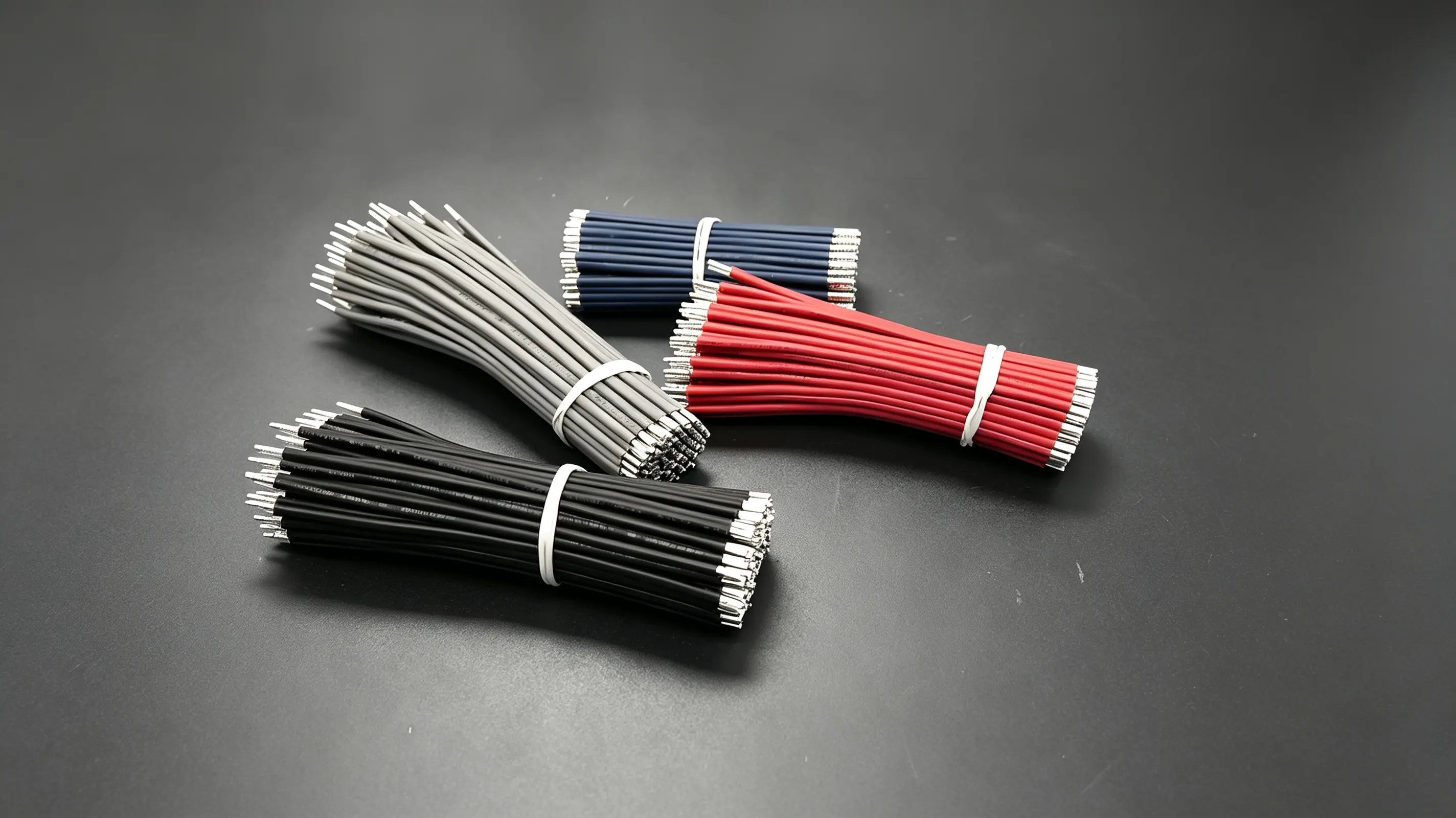
UL Style 3302 is an Appliance Wiring Material (AWM) wire style under the UL 758 certification system, specified for low-voltage internal wiring of electronic equipment, including Class 2 applications. It adopts cross-linked polyethylene (XL-PE or foamed XL-PE) insulation, whose cross-linked structure supports its higher temperature rating and application-specific durability.
UL3302 wire is commonly used in low-voltage internal wiring of electronic equipment where its 30 Vac/105°C rating and physical construction meet application requirements. UL3302 28AWG is a common size for miniature low-voltage signal and, in some applications, low-current power harnesses, balancing dimensional compactness and basic electrical performance for compact circuit designs.
Typical UL3302 XL-PE Wire Applications
Typical applications may include low-voltage precision electronic scenarios requiring stable thermal and mechanical performance, including:
-
Medical precision equipment and testing instruments
-
Industrial control systems and miniature sensor signal harnesses
-
Automotive electronic modules and selected low-voltage BMS-related circuits
-
Robotics and automated mechanical transmission auxiliary circuits
-
High-precision communication equipment and compact consumer electronics
UL3302 XL-PE vs UL1007 PVC: Standard Specification Comparison
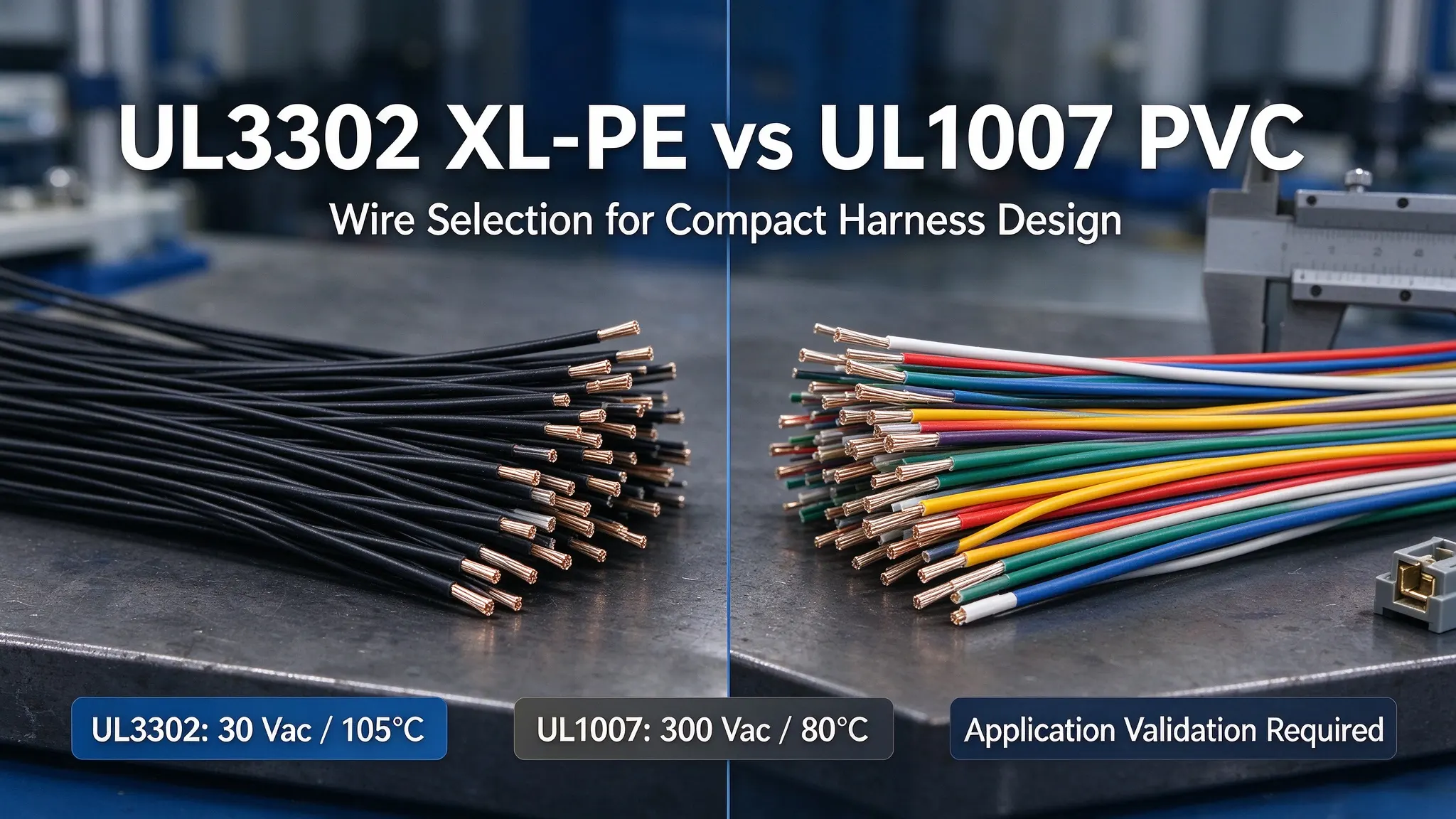
A frequent design question in precision prototyping is whether UL1007 can substitute UL3302 for miniature harness projects. Both are UL 758-certified AWM wires, but they feature distinct official UL style ratings, insulation materials, and design positioning, leading to differentiated applicable scenarios. Material selection must match operating voltage, temperature, mechanical movement, and environmental conditions rather than relying solely on AWG size.
The following table compares the official baseline specifications of UL3302 and UL1007 per UL iQ AWM style standards:
|
Performance Feature
|
UL3302 (XL-PE Insulation)
|
UL1007 (PVC Insulation)
|
|
Insulation Material
|
Cross-linked Polyethylene (XL-PE / Foamed XL-PE)
|
Polyvinyl Chloride (PVC)
|
|
Rated Temperature (UL Standard)
|
105°C
|
80°C
|
|
Rated Voltage (UL Standard)
|
30 Vac (Class 2 low-voltage circuits)
|
300 Vac general internal wiring
|
|
Repeated Flex Performance
|
Depends on wire construction and application validation
|
Depends on PVC formulation and wire construction
|
|
Core Application Scenarios
|
Compact low-voltage Class 2 precision electronic harnesses
|
General static internal equipment wiring
|
In practice, neither UL style is universally superior. UL1007 offers higher voltage tolerance and cost advantages for conventional static internal wiring rated at 80°C. UL3302 28AWG can support compact harness designs when the selected conductor construction and insulation dimensions meet connector and routing requirements. Neither wire should be selected solely on insulation material when repeated flexing is required; flex-life testing must adopt actual wire construction, bend radius, movement pattern, and on-site environmental conditions.
Why Engineers Select UL3302 for Precision Wire Harness Prototyping
In miniature harness projects with high-precision connectors (e.g., HRS DF57H series), insulation material and wire construction often exert a more critical impact on long-term reliability than mere AWG conductor size. XL-PE insulation delivers stable thermal performance and compact structural design, making UL3302 suitable for specific compact low-voltage precision scenarios with verified application conditions.
UL3302 28AWG may be considered when several of the following design conditions apply:
-
Compact or fully sealed electronic enclosures with limited routing space
-
Dynamic equipment with minor repeated cable movement during operation
-
Miniature terminals with tight conductor and insulation-diameter matching requirements
-
Applications where the selected wire requires a 105°C temperature rating
-
Strict long-term lifecycle stability requirements for precision circuits
UL3302 28AWG XL-PE Wire: Key Standard Specifications
UL3302 28AWG is a common size for miniature low-voltage signal and low-current power harnesses, balancing dimensional compactness, assembly flexibility, and precision connector crimp compatibility. The specifications below follow UL 758 baseline standards, with minor deviations based on manufacturer conductor stranding and insulation design:
|
Specification Item
|
Standard Typical Value
|
|
Wire Style
|
UL Style 3302 AWM wire (compliant with UL 758 standards)
|
|
Conductor Gauge
|
28AWG
|
|
Insulation Material
|
Cross-linked Polyethylene (XL-PE / Foamed XL-PE)
|
|
Rated Voltage
|
30 Vac (Class 2 low-voltage circuits)
|
|
Rated Temperature
|
105°C
|
|
Conductor Type
|
Bare Copper / Tinned Copper (optional)
|
|
Typical Outer Diameter
|
Approximately 0.8–0.9 mm for the selected wire construction
|
|
Core Application
|
Compact low-voltage precision electronic wire harnesses
|
For miniature connectors such as the HRS DF57H series, wire outer diameter, conductor stranding, terminal matching, and crimp specifications should be evaluated comprehensively during prototype development to ensure assembly consistency and electrical stability.
Engineering Validation Considerations for Harness Design
Wire material performance in actual harness assemblies cannot be fully judged by standard parameters alone. Practical engineering validation is required to verify adaptability to specific operating environments. XLPE insulation provides reliable thermal stability and compact structural advantages for precision harness designs, but actual flex life, aging resistance, and mechanical durability depend on conductor stranding, insulation thickness, bend radius, movement frequency, and on-site environmental conditions.
In dynamic harness applications, validation plans must include repeated bending tests, high-temperature and humidity aging tests, and confined space thermal stability tests that fully simulate actual working conditions. The goal of validation is to confirm whether the selected wire construction matches the product’s mechanical movement and thermal environment requirements, rather than simply comparing insulation material performance.
Core Engineering Lessons from Prototype Practices
Wire selection should consider operating temperature, installation space, mechanical movement frequency, connector compatibility, environmental exposure, and expected service life. Reliability differences in precision harnesses often stem from insulation material adaptability rather than conductor AWG size.
Selecting wires solely based on gauge size or material cost increases the risk of prototype revision and mass production quality fluctuations. Standard wire specifications provide only baseline design references, and scenario-based validation is indispensable for customized precision projects.
Standard UL3302 Wire Harness Prototyping Workflow Based on IPC/WHMA-A-620 and UL 758
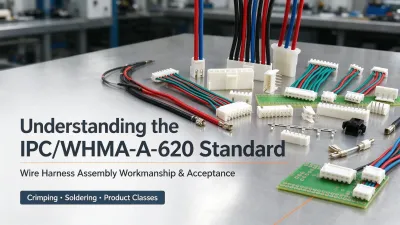
High-quality wire materials require standardized assembly processes to avoid electrical and mechanical defects. Our prototype workflow uses IPC/WHMA-A-620 workmanship criteria for harness assembly operations and verifies the applicable UL 758 requirements for the selected AWM wire, ensuring prototype consistency and mass production reproducibility.
Step 1: Engineering Drawing Review & Full Material Verification
Pre-production engineering verification covers customer drawings, BOM parameters, and technical specifications to eliminate material mismatch risks. Key items include UL3302 wire certification validity, 28AWG conductor specification accuracy, connector/terminal matching parameters, RoHS/REACH compliance, wire length and stripping tolerance standards, and customized workmanship requirements. Complete material traceability records are established for full-process quality tracking.
Step 2: Precision Automatic Wire Cutting & Stripping
Automated wire processing equipment is adopted to guarantee dimensional accuracy. For a specific HRS DF57H prototype configuration, the approved process specification may require a wire length of 31±3 mm and a stripping length of 1±0.5 mm. Strict depth control is implemented during stripping to prevent XL-PE insulation scratches or copper strand damage, with 100% visual inspection of stripped wires before subsequent processes.
Step 3: Standardized Precision Terminal Crimping
Terminal crimping is the core process determining harness mechanical and electrical reliability. All operations follow IPC/WHMA-A-620 objective inspection criteria, covering crimp height, crimp width, bellmouth formation, insulation support, conductor brush uniformity, and terminal deformation. Pull-force requirements follow the applicable customer or terminal manufacturer specification. First-article products adopt destructive cross-section analysis to verify qualified conductor compression and crimp structure.
Step 4: Precision Connector Housing Assembly
After crimping qualification, terminals are inserted into connector housings, with strict inspection of cavity matching, terminal locking state, insertion orientation, housing integrity, and overall appearance. For miniature precision connectors, insertion force and terminal retention are monitored to avoid terminal back-out and assembly dislocation defects.
Step 5: 100% Full Electrical Testing
All prototype harnesses undergo full electrical testing to eliminate hidden circuit risks. Routine test items include open circuit detection, short circuit detection, pin sequence verification, wiring correctness confirmation, and circuit continuity testing. Customized insulation resistance and dielectric withstand tests can be added on demand per customer requirements to meet special electrical performance standards.
Step 6: Final Dimensional & Visual Inspection + Prototype Release
Final inspection covers overall harness length tolerance, connector installation orientation, wire routing uniformity, surface appearance, label specification, and packaging compliance. Prototype delivery and process document updates are completed only after all inspection records are approved, providing standardized references for subsequent mass production.
Full-Link QC System: From Prototype to Mass Production
Customer-approved prototypes serve as the unified production benchmark. Full-process quality control is implemented to stabilize batch consistency:
-
IQC (Incoming Quality Control): Verify UL certification validity, wire gauge accuracy, connector specifications, and full material traceability of raw materials
-
IPQC (In-Process Quality Control): Regularly inspect stripping quality, crimp dimensional accuracy, pull force compliance, and on-site assembly workmanship during production
-
FQC (Final Quality Control): Complete dimensional calibration, visual appearance inspection, and full electrical performance testing before packaging
-
OQC (Outgoing Quality Control): Conduct final sampling inspection and shipment compliance verification according to approved quality plans before delivery
For high-reliability projects, additional customized environmental validation (temperature cycling, humidity aging, flex simulation testing) can be added per customer specifications to ensure long-term operational stability.
6 Common Precision Harness Engineering Mistakes to Avoid
Most prototype and mass production quality risks stem from standardized process omissions and one-sided material selection logic. Based on long-term manufacturing and prototyping practices, the most frequent engineering errors are summarized as follows:
-
Equating identical AWG to identical performance: 28AWG UL3302 and 28AWG UL1007 adopt completely different insulation systems and standard ratings; performance cannot be judged by conductor size alone.
-
Inappropriate PVC wire selection for operating conditions: Selecting a PVC-insulated wire without checking the required temperature, voltage, mechanical movement, and environmental conditions can increase the risk of later design changes and reliability issues in high-temperature or dynamic working scenarios.
-
XL-PE insulation damage during stripping: Although XL-PE has excellent thermal and mechanical properties, uncalibrated stripping equipment will scratch insulation and compromise long-term reliability.
-
Ignoring pull-force verification for short harnesses: Short miniature wires are prone to hidden crimping defects; pull force testing is essential to verify terminal retention stability.
-
Decoupling wire and connector matching design: Harness overall reliability depends on matched wire outer diameter, terminal structure, and insulation performance, not single-component quality.
-
Relying solely on standard parameters without scenario validation: Industry standards provide only baseline requirements; customized application environments require targeted prototype verification.
Professional Wire Selection Engineering Recommendations
UL3302 28AWG XL-PE wire is recommended for precision projects that meet most of the following conditions. Final material selection must be confirmed via prototype testing and customized customer specifications to match actual application scenarios:
-
Harnesses requiring minor repeated dynamic movement during operation
-
Equipment with extremely limited internal installation and routing space
-
Long-term continuous operating temperature up to 105°C
-
Miniature terminals with tight conductor-size and insulation-diameter requirements
-
Product long-term reliability is prioritized over initial material cost control
Frequently Asked Questions (FAQs)
1. What is UL3302 XL-PE wire used for?
UL3302 XL-PE wire is a UL 758 AWM low-voltage wire specified for Class 2 electronic equipment internal wiring. It is suitable for precision scenarios requiring compact routing and stable thermal performance, including medical testing equipment, industrial sensors, automotive electronic modules, robotics, and compact communication devices.
2. Can UL3302 fully replace UL1007?
No. UL Style 3302 AWM wire features a 30 Vac low-voltage rating and a 105°C rated operating temperature under applicable UL conditions, and may be considered for compact low-voltage harnesses where the selected wire construction and application conditions are suitable. For repeated flexing, application-specific validation is required. By contrast, UL1007 supports 300V/80°C for general static internal wiring. Material selection depends on actual operating voltage, temperature, and mechanical environment requirements.
3. Why select XL-PE wire for miniature wire harnesses?
XLPE insulation can deliver reliable thermal stability and support compact wire construction for space-limited assemblies. However, actual flexibility, aging resistance, and dimensional stability depend on specific wire conductor construction, insulation design, and practical application conditions.
4. Is UL3302 28AWG suitable for power transmission?
It can be used in low-current power circuits when conductor size, allowable current, temperature rise, voltage drop, connector rating, and application requirements are fully evaluated. It is not intended for high-current power applications.
5. Does UL3302 certification guarantee harness reliability?
UL3302 is a wire material style standard. Overall harness reliability is jointly determined by connector matching, crimping process, assembly workmanship, and application environment. Prototype validation and standardized manufacturing are essential guarantees of final product quality.
6. What standards govern UL3302 harness prototyping?
Prototyping processes reference two core industry specifications: UL 758 applies to the selected AWM wire requirements, while IPC/WHMA-A-620 provides workmanship criteria for cable and wire harness assemblies. Additional regulatory or customer-specific requirements may apply depending on the finished product and target market.
Conclusion
Successful precision wire harness prototyping relies on scientific material selection and standardized manufacturing processes, rather than single-component performance advantages. As a UL Style 3302 AWM wire specified under UL 758, UL3302 28AWG offers a 105°C rated operating temperature under applicable UL conditions and can support compact harness designs when its conductor and insulation dimensions meet the application requirements, making it a suitable option for compact low-voltage electronic systems.
Engineers should adopt multi-dimensional wire selection logic combining standard specifications, environmental adaptability, and process compatibility. Combining applicable standards with scenario-based prototype validation helps identify design risks early, reduce unnecessary revisions, and improve mass-production consistency.
Get Professional UL3302 Harness Prototyping Support
Our engineering team provides one-stop customized services for medical, industrial, automotive, and robotic precision wire harness projects, including design review, wire and connector selection, prototype manufacturing, crimp validation, process optimization, and mass production technical docking. We help customers shorten validation cycles and reduce design revision risks.
Submit your drawings and specifications now to get a customized UL3302 wire harness prototyping solution.